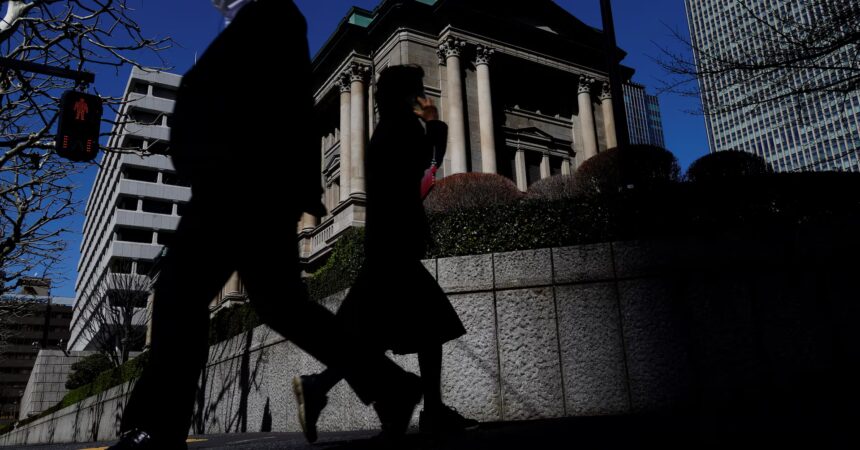
The Bank of Japan (BOJ) is set to evaluate the advantages and disadvantages of raising interest rates at its upcoming policy meeting, as indicated by Governor Kazuo Ueda. In a speech delivered to business leaders in Nagoya, Ueda provided one of the clearest hints of a potential hike in rates scheduled for December. Following his comments, market reactions saw both the yen and Japanese bond yields increase, with investors now assigning an approximately 80% probability to a rate hike during the December 18-19 meeting, up from 60% the previous week.
Ueda expressed optimism about Japan’s economic recovery from a contraction in the third quarter, noting that the impact from U.S. tariffs was less severe than anticipated. As concerns about tariff effects diminish, the likelihood of the BOJ meeting its economic and price projections appears to be improving, suggesting that conditions are becoming more favorable for a rate increase. He highlighted the importance of monitoring firms’ wage-setting behavior, indicating that this will influence the timing of any potential rate hike.
The tightening labor market and sustained corporate profitability were also emphasized, with Ueda mentioning that the main business lobby has urged its members to continue increasing wages. The BOJ is reportedly gathering data on wage trends ahead of its December meeting, weighing economic developments both domestically and internationally, alongside market fluctuations when considering the potential rate increase.
After Ueda’s remarks, the yen strengthened by 0.4%, reaching a session high of 155.49 against the dollar, while yields on two-year Japanese government bonds rose two basis points to 1.01%, marking the highest level since June 2008. Analysts interpret Ueda’s comments as an early signal of a December hike, with experts cautioning that refraining from action could lead to significant market volatility.
The BOJ began tapering its extensive stimulus measures last year and raised its policy rate to 0.5% in January, anticipating that inflation was close to sustainably meeting its 2% target. However, the inflation rate has persisted above this target for over three years, largely fueled by continuous increases in food prices. A recent Reuters poll indicated that a slight majority of economists expected a rate increase in December, with all forecasting an increase to 0.75% by March.
Ueda noted that, despite negative real interest rates, a further hike would maintain low borrowing costs and would be more akin to “easing off the accelerator” than “applying the brakes.” He cautioned that delaying necessary adjustments to monetary support could lead to excessively high inflation, necessitating rapid intervention that might disrupt markets.
He also did not provide specifics on potential future rates but mentioned the BOJ would clarify its positioning relative to the neutral rate for the economy following a hike to 0.75%. Persistent yen weakness, which has been concerning for policymakers due to rising import costs fueling inflation, was highlighted. Ueda acknowledged that a depreciating yen could accelerate consumer inflation, a key factor for the BOJ to assess in forming policy.
The recent decline in the yen has reignited discussions around possible currency intervention, reflecting the administration’s growing concerns over the negative implications of a weakening currency. Reports suggest that the BOJ is preparing markets for a rate hike as soon as December, driven by renewed worries about sharp falls in the yen and diminishing political pressure to maintain low rates.