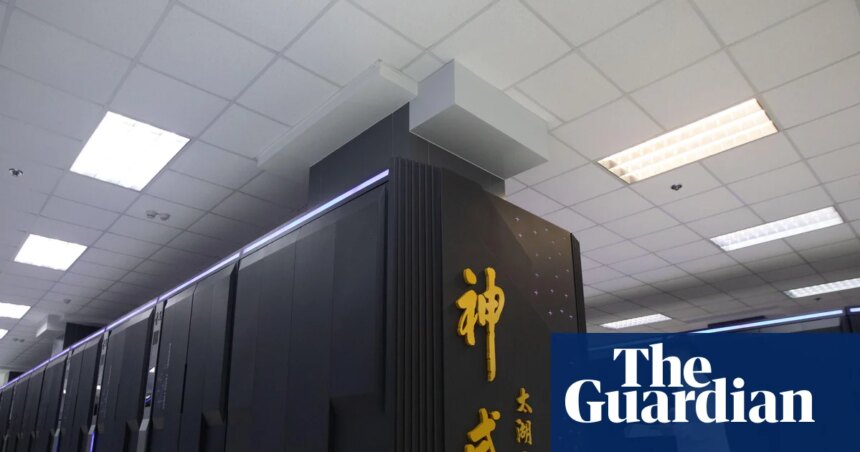
A significant shift in the global supercomputing landscape has occurred, with a Chinese supercomputer now claiming the title of the world’s most powerful system. The LineShine computer, located in Shenzhen, has recently been recognized in the Top500 rankings, marking the first time since 2017 that a Chinese supercomputer has achieved this esteemed position.
The LineShine computer made its debut at the top of the list, overtaking the US supercomputer El Capitan, which previously held the leading position. Notably, LineShine operates using conventional computer chips (CPUs), setting it apart from many other leading high-performance computers that rely on graphics processing units (GPUs), which are typically employed in artificial intelligence applications. The machine’s operational requirements are substantial, consuming approximately 42.2 megawatts of electricity to function.
Supercomputers like LineShine are capable of processing data at speeds over 1,000 times greater than standard computers, enabling a wide range of applications, including advancements in medical research, climate modeling, simulations for nuclear testing, human behavior prediction, and virtual weapon testing. LineShine, managed by China’s National Supercomputing Center, has achieved an impressive processing capacity of 2.198 exaflops, allowing it to perform over 2 quintillion calculations per second.
Following LineShine in the rankings is El Capitan, which is housed at the Lawrence Livermore National Laboratory in California. It is now positioned in second place, with two additional US supercomputers from national labs in Tennessee and Illinois also featuring in the top five. The Jupiter supercomputer in Germany has fallen to fifth place. These five systems are recognized as the only publicly verified exascale computers worldwide.
The Top500 list also features entries from several other countries, including Italy, Switzerland, and Japan. Notably, the UK has a total of 11 supercomputers on the list, with the University of Bristol’s Isambard-AI ranked the highest among them, though it has dropped two places since the last assessment. This advanced system is equipped with 5,400 Nvidia “superchips” and is encased in a secure facility.
In Australia, the Setonix supercomputer, ranked 86th, leads among the four machines in the region. Meanwhile, the European Union has earmarked €20 billion for the construction of ultra-capable supercomputing sites aimed at nurturing the development of next-generation AI technologies. This initiative reflects Europe’s ambition to keep pace with the technological advancements of the US and China.
These proposed AI “gigafactories” are expected to focus on transformative innovations across various fields such as healthcare, biotechnology, robotics, and scientific study, with expectations that the leading facilities will utilize more than 100,000 advanced AI processors, outstripping the capabilities of current top performers. However, concerns have been raised regarding the environmental impact of these energy-intensive data centers, as they will not only require vast amounts of power but also substantial water resources for cooling. Plans for sustainable operations include running these facilities on renewable energy and implementing water recycling practices.
This latest development in the supercomputing race highlights not only advancements in technology but also the ongoing competition among nations to establish leadership in emerging fields that could shape future global trends.