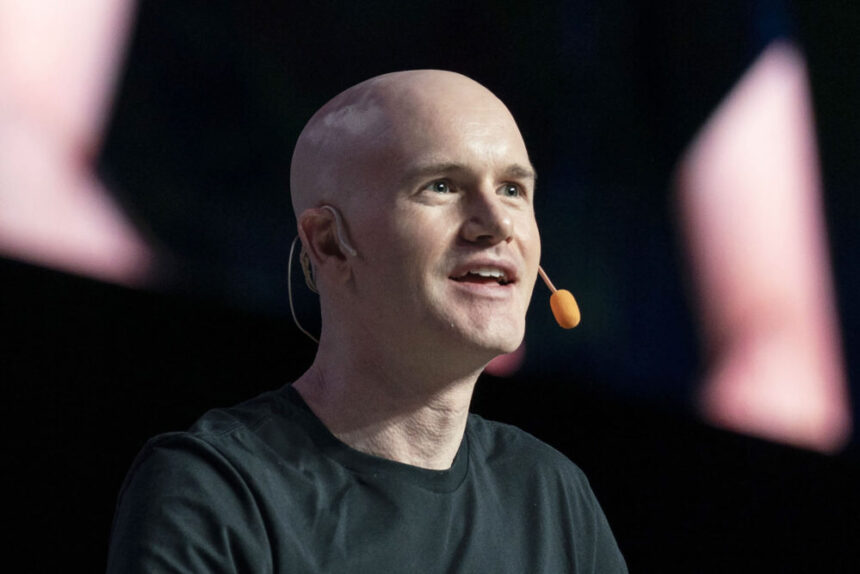
Coinbase CEO Brian Armstrong has outlined an ambitious eight-point reform agenda, emphasizing critical upgrades needed in the financial system. This announcement, shared on X, comes amidst a remarkable surge in the tokenized real-world asset market, which recently surpassed $34.9 billion, indicating a 200% increase over the past year.
Armstrong identifies key focus areas for reform, beginning with the tokenization of real-world assets such as real estate, stocks, bonds, and funds. He argues that this approach would facilitate instant settlement, allow for fractional ownership, and promote a broader global distribution of these assets. Additionally, he advocates for 24/7 global trading supported by pooled liquidity to enhance capital efficiency.
On the topic of stablecoins, Armstrong highlights their role in enabling payments between autonomous AI agents. He notes that Coinbase’s x402 protocol has achieved significant traction, processing over 75.4 million transactions within a month. This positions Coinbase at the forefront of innovation in the digital financial landscape, especially given the company’s recent investment in Centrifuge, aimed at bolstering tokenization infrastructure on its Base Layer 2 network.
Armstrong further discusses the potential of artificial intelligence in financial services, stating that AI-driven tools could improve risk assessment, credit evaluation, compliance, and investment advice. He envisions a future where everyone has access to high-quality financial guidance, thus democratizing the wealth-building process. However, he stresses the need for risk-based regulations instead of sweeping regulatory measures, noting the importance of utilizing the remaining legislative window before potential political shifts.
In terms of market dynamics, the tokenized real-world asset market has been described by some estimates as exceeding $37.5 billion. Coinbase Asset Management’s recent launch of CUSHY, a tokenized stablecoin credit strategy for accredited investors, showcases innovative developments aimed at utilizing established blockchain networks like Ethereum, Solana, and Base.
The ongoing discussions around the CLARITY Act, which pertains to federal crypto market structure, are becoming increasingly crucial. The recent markup by the Senate Banking Committee has sparked renewed urgency in Armstrong’s policy advocacy, especially as corporate entities like SpaceX reveal significant holdings in Bitcoin, further affirming the growing acceptance of digital assets in mainstream finance.
Reactions from industry stakeholders have been mixed but insightful. Whale Factor, a recognized crypto analytics platform, highlighted Armstrong’s focus on real-world asset tokenization and continuous trading infrastructure. Nevertheless, the SEC’s ongoing delays regarding approvals for tokenized stock trading present challenges, even as Coinbase maintains a robust market valuation near $48.7 billion.
Looking ahead, the impending vote on the CLARITY Act markup could serve as a pivotal juncture for regulatory development, essential for the implementation of Armstrong’s agenda. As Coinbase prepares for its next earnings report, there is anticipation regarding the adoption metrics of the x402 protocol and the expansion of the Base network, which could further influence the company’s trajectory in a rapidly evolving financial landscape.