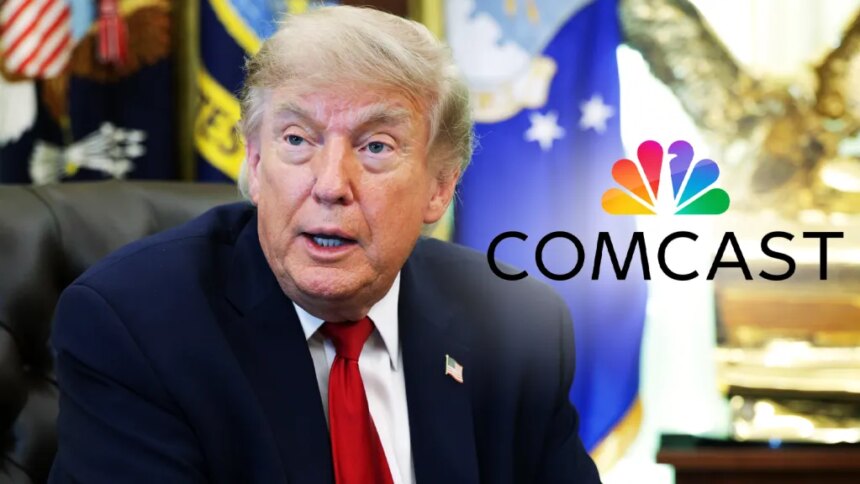
Comcast has announced a significant strategic move to split from NBCUniversal, a decision that is not expected to face major antitrust scrutiny, as the companies are effectively de-consolidating. However, while the split itself might be straightforward, questions arise about the potential future of both companies, especially if either entity is sold.
During an investor call, Comcast co-CEO Brian Roberts clarified that the objective of the split is to empower each company to maximize its assets and focus on its own growth strategies, countering any speculation that this move is a precursor to mergers and acquisitions (M&A).
Speculation around potential M&A is intensifying, particularly in light of Paramount’s anticipated acquisition of Warner Bros. Discovery, a monumental $110 billion deal that could catalyze further transactions in the entertainment sector.
The backdrop of this unfolding scenario includes the contrasting regulatory environments under the Trump and Biden administrations. Historically, the Trump administration was perceived as more favorable towards mergers than its successor, but achieving regulatory approval often came with stipulations. For instance, Paramount Global settled a lawsuit related to its news programming, seen as a precursor to smoother regulatory pathways for its merger activities.
As analysts consider the implications of the Comcast-NBCUniversal split, certain key factors emerge. Although the exact structure of the split has yet to be detailed, expectations suggest it may not trigger a review from the Federal Communications Commission (FCC), which is significant given the FCC’s role in reviewing transactions that affect broadcast licenses. The perception is that Comcast might be able to structure the split such that there is no transfer of control over NBC’s broadcast stations, akin to Viacom’s 2005 split with CBS, which similarly avoided FCC scrutiny.
Despite this hopeful outlook, tensions remain between Comcast and regulatory bodies, particularly given the scrutiny from FCC Chairman Brendan Carr, who has questioned the company’s diversity initiatives. Industry experts note that navigating an FCC transfer could expose Comcast to regulatory challenges, given the current political climate.
On the antitrust front, while the divorce itself is unlikely to elicit concerns, the landscape may shift if either Comcast or NBCUniversal explores future mergers. If BBCU were to be sold, analysts caution about the potential for increased concentration in the already competitive streaming market. Concerns have also been raised about the implications of any deals in an industry marked by high concentration of cable and satellite services, which have historically attracted regulatory attention.
The timing of future M&A activities could further complicate the situation, as political dynamics may shift by the 2028 presidential election. Should a Democrat return to office, the pressure for stricter merger scrutiny could escalate, thereby complicating the landscape for Comcast and NBCUniversal’s post-split strategies.
As discussions about industry consolidation evolve, analysts view this split as potentially opening up new strategic options for both Comcast and NBCUniversal, particularly in navigating pressures from evolving technologies and services. Nevertheless, any future M&A activities are likely to require careful timing to maintain the tax-free nature of the spin-off, keeping the companies on a cautious trajectory moving forward.