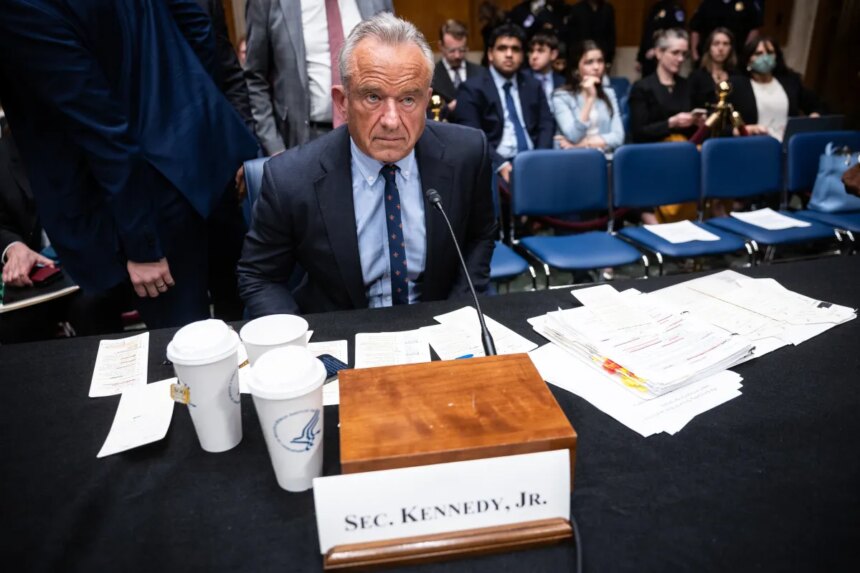
Health and Human Services (HHS) Secretary Robert F. Kennedy Jr. addressed Senators this week, asserting that Medicaid funding is not being reduced, emphasizing projections that indicate overall spending for the program will increase over the next decade. During a contentious hearing, he told Senator Ben Ray Luján of New Mexico that in Washington, the term “cut” often has different connotations, suggesting that contrary to popular belief, Medicaid is not facing a reduction.
However, Democratic lawmakers and health policy experts dispute this claim, arguing that the increase in overall spending masks nearly $1 trillion in cuts compared to what Medicaid would have received under previous frameworks. They assert that low-income Americans who rely on Medicaid might face a loss of coverage due to impending work requirements and financing alterations, despite the projected growth in total federal spending.
Kennedy’s supporters maintain that these adjustments will help target waste and fraud within the system and encourage employment, thereby bolstering the program’s sustainability in the long term. As part of ongoing discussions, Newsweek reached out to HHS for clarification on their stance.
Critics of the administration argue that the rising spending figures are misleading and focus on the broader financial landscape. They contend that the projected increase in Medicaid spending does not equate to expanded coverage or enhanced benefits but is largely driven by inflation, healthcare costs, and changes in population demographics. Edwin Park, a research professor at Georgetown University, emphasized that the federal government anticipates spending nearly $1 trillion less than it would have without the recent changes, reiterating that spending growth in nominal terms does not mitigate the effects of budget cuts.
When measured against a baseline—considering what costs would have been without legislative changes—the Congressional Budget Office (CBO) estimates that federal Medicaid spending could see a reduction of approximately $1 trillion over the next decade. The Kaiser Family Foundation corroborates this, noting that much of the expected savings arises from implementing work requirements and restricting how states can increase their share of Medicaid funding. Analysts warn that these changes could lead to coverage reductions, particularly among low-income adults impacted by new reporting mandates.
Democratic Senator Tina Smith from Minnesota pointed out in her exchange with Kennedy that the CBO has projected nearly $1 trillion in Medicaid cuts under the Trump administration, leading to the potential loss of health coverage for approximately 7 million people. Kennedy responded by asserting that legally enrolled individuals would not lose their benefits, which Smith immediately contested.
The debate over work requirements has become pivotal, as the administration defends its position by stating that such measures would facilitate transitions off public assistance. Detractors, however, cite historical examples where similar initiatives resulted in significant coverage loss due to administrative challenges rather than a lack of workforce engagement. A February analysis by the RAND Corporation warns that state Medicaid budgets could decline by hundreds of billions of dollars over the next decade, with some states facing reductions exceeding 5%. This could strain essential services, including hospitals and nursing homes, at a time when demand remains high.
Kennedy has downplayed these warnings, suggesting they are politically motivated, part of a narrative pushed by Democrats ahead of the midterm elections. He maintains that Medicaid reforms are essential to address federal deficits and modernize the program. In a separate hearing, Kennedy reiterated his belief that claims of cuts are unfounded, framing his administration’s focus on preventing fraud and waste as a positive reform rather than a reduction of benefits.
Experts argue that such macro-level discussions fail to address the immediate concerns of families at risk of losing coverage or states potentially required to cut vital services. “The question isn’t whether Medicaid spends more dollars in 2034 than it did in 2024,” Park said, “but whether the program is doing less than it would have under existing laws. By that measure, these are very real cuts.” As budget discussions proceed, Medicaid remains a significant political battleground, with Republicans advocating for fiscal restraint while Democrats warn of the consequences for vulnerable populations.