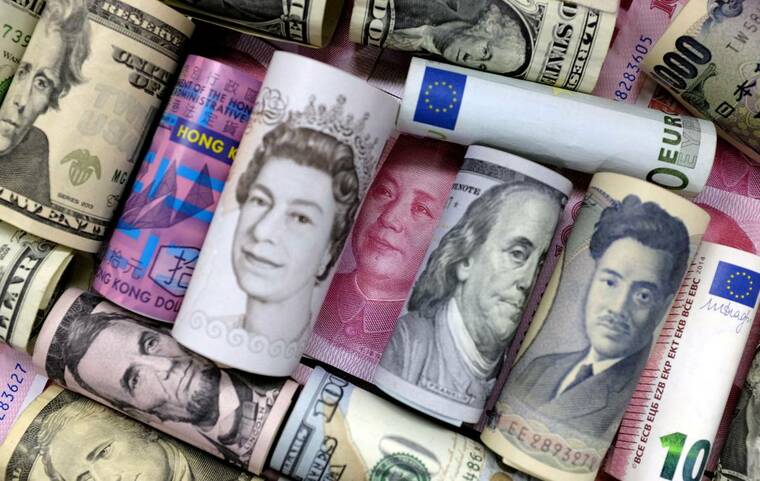
The U.S. dollar experienced a slight decline but remained near a 13-month high, buoyed by ongoing optimism concerning economic growth in the United States and expectations of interest rate hikes from the Federal Reserve. This surge in the dollar’s value is also attributed to a growing AI-driven boom in U.S. equity markets, which is attracting substantial capital inflows.
Notably, the Japanese yen has weakened significantly, hitting its lowest level against the dollar since 1986. The recent more hawkish stance taken by the Federal Reserve during its June meeting, under new chair Kevin Warsh, has intensified speculation about potential interest rate increases this year. Federal Reserve officials are striving to combat inflation rates that remain considerably above their 2% target. The futures market is currently predicting a 64% probability of a rate hike by September.
The economic landscape is in sharp focus this week, particularly with the upcoming jobs report for June. Analysts anticipate that the report will indicate a growth of approximately 110,000 jobs in the labor market, maintaining an unemployment rate of 4.3%. This follows three consecutive months of unexpected job gains, which have reinforced the Fed’s hawkish posture. However, any significant downturn in labor market data could prompt a reevaluation of the current monetary policy path.
Marc Chandler, chief market strategist at Bannockburn Global Forex, noted, “The labor market appears to have accelerated,” suggesting that previous concerns about a slow labor market have subsided.
In a separate political context, the U.S. Supreme Court declined to allow former President Donald Trump to dismiss Federal Reserve Governor Lisa Cook. Trump has stated his administration would act quickly to restrict Cook’s influence on U.S. economic policy.
Additionally, traders are watching developments regarding U.S.-Iran relations amidst ongoing tensions, particularly regarding the implementation of an interim peace agreement. Technical teams from both nations are expected to convene in Doha soon, even as recent military exchanges raised questions about the stability of this accord.
The dollar index, which measures the U.S. currency against six major counterparts, dipped 0.28% to 101.08, though it maintains a 2.17% gain for the month. Jane Foley, chief FX strategist at Rabobank, remarked on the dollar’s performance, saying, “There’s been so much discussion about the structural decline in the value of the dollar…but there is space for a cyclical uptrend.”
Recent data from the U.S. market regulator reveals that investors are currently holding their largest bullish stance in the dollar relative to other major currencies since 2019, amounting to about $36.4 billion.
The euro rose by 0.39% to approximately $1.1427 after recently hitting a 13-month low against the dollar, having declined by 2% this month. The European Central Bank’s annual forum is set to commence, featuring a panel including Fed Chair Warsh, whose remarks will be closely monitored by investors for insights regarding future rate trajectories.
Meanwhile, the yen hit 161.97, marking its weakest point in decades. A report from LMAX Group indicated that the Bank of Japan’s recent 25 basis points increase to 1.00% has done little to remedy the substantial interest rate disparity between Japan and the United States, particularly as the Fed adopts a sustained hawkish outlook.
In the UK, the pound strengthened by 0.42% to around $1.3256 after recently reaching a seven-month low. Andy Burnham, the prospective British prime minister, pledged to implement significant political reforms aimed at decentralizing power and fostering cooperative governance over divisive politics in the next decade. His impending choice for finance minister could play a crucial role in shaping both the pound and the gilt market. Burnham’s economic proposals are expected to be grounded in fiscal discipline.