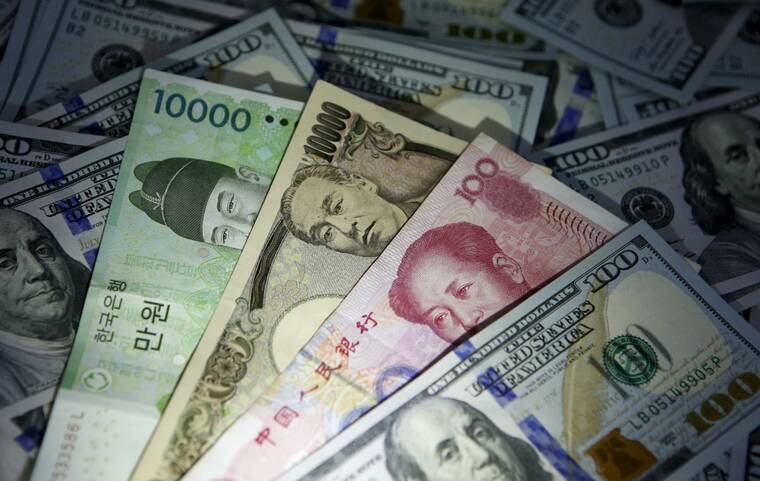
The U.S. dollar has faced a decline against the Japanese yen for the second consecutive day, influenced by Japan’s intervention to bolster its currency. After Japan’s top currency diplomat, Atsushi Mimura, indicated ongoing speculative activity in currency trading, concerns within the market grew, reflecting authorities’ discomfort with the recent rapid fluctuations of the yen.
In the wake of this intervention, the dollar momentarily dropped from approximately 157.1 to 155.49 against the yen but subsequently regained some lost ground. Current figures show the dollar standing at 156.62.
Reports indicate that Japanese officials intervened on Thursday to purchase yen as it plummeted to 160.7 per dollar, marking its weakest position since July 2024. Senior investment strategist Uto Shinohara of Mesirow Currency Management raised questions about the long-term effectiveness of such interventions, suggesting that historical patterns demonstrate diminishing returns without significant policy alterations, rate hikes, or coordinated measures.
Recent data from the Bank of Japan revealed that approximately 5.48 trillion yen (equivalent to about $35 billion) may have been spent during the intervention, just shy of the $36.8 billion utilized in July 2024.
The yen’s ongoing weakness can be largely attributed to substantial disparities in interest rates between the U.S. and Japan, alongside rising oil prices sparked by the conflict in Iran, which have also bolstered the dollar’s strength. The dollar is now trending towards its most considerable weekly loss against the yen since early February, currently down about 1.7%.
Recent meetings of the European Central Bank (ECB) and the Bank of England (BOE) resulted in both institutions maintaining their interest rates, aligning with market expectations following earlier pauses by the Federal Reserve and the Bank of Japan. Nevertheless, both the ECB and BOJ signaled potential rate hikes as early as June in response to inflation pressures fueled by increased energy costs.
In response to these developments, the euro experienced a modest rise of 0.32%, reaching $1.177, marking its second consecutive weekly gain. The British pound also rose by 0.25%, trading at $1.1364 and showing signs of a fifth straight weekly advance. Meanwhile, the dollar was down 0.27% against the Swiss franc, anticipating a second consecutive week of declines.
Looking ahead, markets are pricing in approximately a two-thirds chance of a rate hike from the Bank of Japan in June, while expectations for a reduction from the Federal Reserve have largely dissipated. This divergence in monetary policy outlooks, combined with a more hawkish stance from the Fed, restricts the potential for a sustained recovery in the yen’s value.