In a San Francisco federal court, a high-profile legal battle is unfolding between two of the tech industry’s most influential figures: Elon Musk and Sam Altman. The lawsuit centers on the origins and evolution of OpenAI, a company that has rapidly become a cornerstone in the realm of artificial intelligence.
Musk and Altman are embroiled in a series of intense claims and counterclaims, each pointing fingers at the other’s motives and actions regarding the company. On Altman’s side, a team of prestigious law firms, including Morrison & Foerster and Wachtell Lipton Rosen & Katz, represent him—marking a robust legal defense backed by a wealth of experience in high-stakes corporate litigation. Musk, conversely, has enlisted the services of several boutique litigation firms, one of which includes an unconventional lawyer with a unique side gig: clowning.
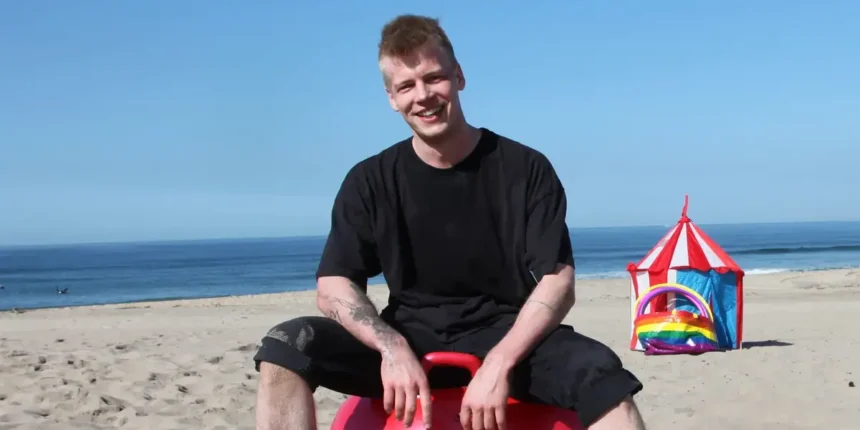
Jaymie Parkkinen, an attorney involved in the case, embodies the intersection of law and performance art. He has emerged as a prominent player in the legal proceedings against OpenAI and Microsoft, taking on a trio of attorneys in a July hearing. His unconventional background as a clown has led to intriguing parallels between his legal practice and his comedic performances. “All of my comedy friends — none of them can believe I’m a lawyer, and none of my lawyer friends can believe I do clown,” Parkkinen stated in an interview.
Parkkinen emphasizes that his clowning is far removed from stereotypical children’s parties; instead, he draws inspiration from the physical comedy styles of legends like Charlie Chaplin and Lucille Ball. He explains that clowning involves shedding societal constructs to reveal one’s genuine self, a theme he incorporates into his performances. His approach involves establishing rules and then creatively subverting them, encouraging audience engagement and dynamic interactions.
In the ongoing lawsuit, Musk initially filed against Altman in 2024, aiming to prevent OpenAI from converting from a nonprofit organization to a for-profit entity. Musk contends that OpenAI, under Altman’s leadership, has strayed from its initial altruistic mission and has essentially become a subsidiary of Microsoft. Altman has countered these claims, suggesting that Musk’s true motives lie in an effort to undermine OpenAI’s success due to jealousy over the development of ChatGPT, positioning Musk’s own AI endeavor, xAI, for dominance.
Parkkinen’s involvement in the litigation has seen him vigorously pursue discovery motions, including a notable attempt to summon Mira Murati, a former OpenAI executive. Despite initial resistance from OpenAI and Microsoft, his efforts paid off as a judge ruled in favor of allowing the subpoena.
In addition to his legal pursuits, Parkkinen has ventured into entrepreneurship with the founding of Clown Cardio, a program that merges fitness with performance art. After observing the physicality required in clowning, he designed sessions that combine exercise and entertainment, attracting attention and interest beyond his local community. He has plans to expand the program after receiving positive media coverage.
Though his focus has shifted predominantly to the Musk-Altman case, Parkkinen is contemplating opening a legal practice centered on intellectual property and artificial intelligence. He asserts that his experiences in clowning have enriched his litigation skills, emphasizing that both fields revolve around the ability to connect with people, whether that be a judge, jury, or audience. Parkkinen believes that the legal profession, often seen as conservative, would benefit from embracing the creativity and spontaneity found in performance art, suggesting that even a simple improv class could significantly enhance a lawyer’s ability to engage.