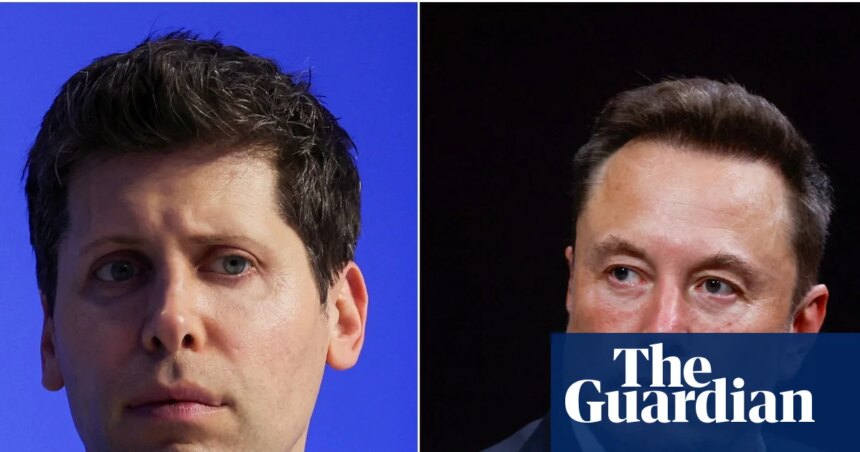
In a dramatic turn of events for the tech world, the courtroom battle between Sam Altman and Elon Musk began this week, bringing to the forefront significant issues regarding artificial intelligence and corporate interests. The trial marks a considerable clash between the co-founders of OpenAI, with Musk alleging breaches of contract against Altman, who currently serves as the company’s CEO.
Musk’s lawsuit claims that Altman has deviated from the foundational agreement of OpenAI by transforming much of the organization into a for-profit entity. This reshaping, Musk argues, undermines the original mission of OpenAI, which was to develop AI technologies for the benefit of humanity. In contrast, Altman and his team maintain that Musk’s motivations stem more from personal grievance than legitimate concerns over AI safety. Following his departure from OpenAI in 2018 amidst internal conflicts, Musk has since established his own AI venture, xAI.
At the heart of Musk’s legal claim is a demand for significant financial restitution, seeking over $134 billion in damages, which he argues should be redirected to support OpenAI’s non-profit arm. Moreover, the lawsuit calls for the removal of Altman and OpenAI President Greg Brockman. However, observers note that the trial may transform into a spectacle dominated by petty disputes rather than the pressing ethical questions surrounding the future of AI.
Critics have raised doubts over Musk’s role as a proponent of AI safety, particularly in light of controversies surrounding his recent endeavors. His chatbot, Grok, has been embroiled in a scandal involving inappropriate uses of generative AI, which raises questions about his commitment to ethical AI practices. Furthermore, Musk’s xAI has faced allegations of community pollution linked to its data centers, further complicating his position as a steward of responsible AI development.
The implications of the trial extend beyond personal animosities. If Musk prevails, it could severely diminish OpenAI’s capacity to attract essential investment, hindering its competitiveness in an increasingly lucrative AI landscape. Conversely, a victory for Altman and Brockman would enable OpenAI to continue operating its for-profit model, potentially leading to substantial financial gain.
In tandem with this legal drama, major tech companies are feeling the strain of competing in an AI-driven marketplace. Meta and Microsoft recently announced substantial workforce reductions, with Meta planning to cut around 10% of its staff—approximately 8,000 jobs. Microsoft is offering voluntary retirement to about 7% of its American workforce. These measures reflect a broader strategy of scaling back personnel to accommodate significant investments in AI infrastructure, a shift that Mark Zuckerberg and Satya Nadella have publicly endorsed.
Meta is expected to spend between $115 billion and $135 billion on AI initiatives in the coming years, marking a dramatic increase from previous expenditures. Similarly, Microsoft anticipates spending between $110 billion and $120 billion on AI in the near future. Analysts suggest this trend reflects a growing reliance on AI capabilities to streamline productivity and manage workloads, with expectations that AI may soon be capable of replacing a significant portion of white-collar jobs.
As companies pivot towards AI technology, there is increasing concern about the implications for job markets and workforce dynamics. Goldman Sachs economists have indicated that companies could exhaust their annual AI budgets within months, prompting discussions about a future where expenditures on AI tokens could surpass those on employee salaries.
Amidst these shifting tides in technology and employment, the ongoing trial between Altman and Musk remains a focal point, albeit with a narrative driven more by personal conflict than by the larger discussions of ethics and safety in AI development. The outcome may ultimately shape not only the futures of OpenAI and Musk’s ventures but also the broader context of AI’s role in society.