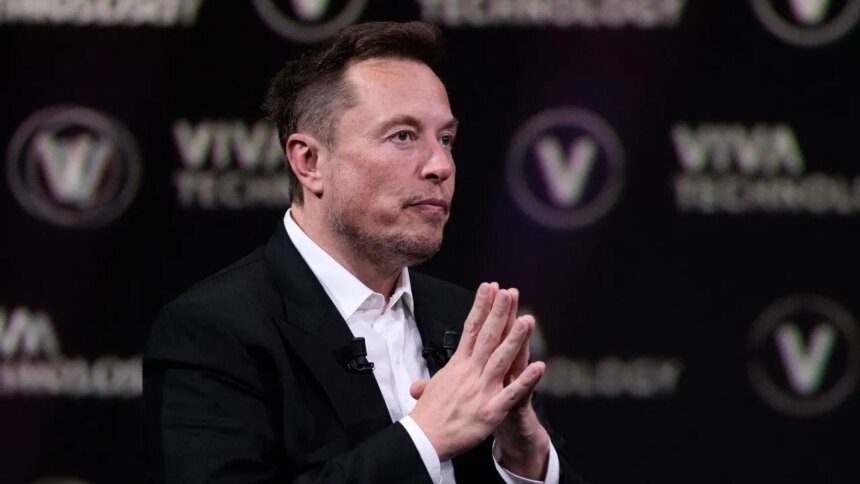
Elon Musk delivered a compelling speech at the recent SpaceX Initial Public Offering (IPO) event, candidly addressing his initial skepticism about the company’s potential for success. During this gathering, Musk underscored the critical mission of making life multi-planetary and crafting an exhilarating future for humanity, highlighting the visionary goals that underpin SpaceX’s operations.
Despite the inspiring narrative, Musk’s financial status has experienced significant fluctuation. Just weeks after reaching the milestone of being the first person to be worth over $1 trillion, his net worth has dropped to approximately $946 billion, as reported by the Bloomberg Billionaires Index. This decline comes in the wake of falling shares in both SpaceX and Tesla, amid a broader technology sector sell-off. Investors have expressed heightened caution regarding the long-term profitability of artificial intelligence and its associated ventures.
Notably, even with this dip, Musk retains his title as the richest person globally by a considerable margin. According to the latest Bloomberg data, Larry Page stands in second place with a net worth of $296 billion, followed closely by Sergey Brin at $275 billion, Jeff Bezos at $257 billion, and Michael Dell at $223 billion.
SpaceX’s IPO was initially priced at $135 per share, and trading began at $150 on June 12, which helped elevate Musk’s net worth beyond the trillion-dollar benchmark once more. At the IPO price, SpaceX’s market valuation exceeded $1.77 trillion, with Musk’s stake of approximately 42% in the company contributing significantly to his wealth, alongside his Tesla shares and other assets.
Following a brief surge where SpaceX shares reached $225.64 on June 16, the stocks subsequently faced a dramatic downturn, falling over 30% during the tech market correction. This plummet on June 22 alone saw the stock drop by 16%, leading to a staggering $240 billion reduction in Musk’s fortune. The decline was compounded the following day with Tesla shares also decreasing by nearly 6%, exacerbating the overall financial impact.
Founded in 2002, SpaceX has established itself as the premier space company, revolutionizing the commercial launch sector with its innovative reusable rocket technology. This advancement has not only reduced launch costs but has also transformed the economic landscape of the space industry. Furthermore, SpaceX has become a pivotal contractor for NASA and the U.S. government, playing a crucial role in both civil and national security missions.
Musk’s relentless pursuit of innovation and his commitment to a future beyond Earth continue to resonate within the tech and space sectors, promising an exciting trajectory for SpaceX and its ambitious goals.