A notable rally in energy stocks has taken place recently, driven by escalating geopolitical tensions, prompting discussions among investors about the sustainability of this momentum. Over the past three months, energy has emerged as the strongest performing sector within the S&P 500 Index, largely correlating with rising crude oil prices. This surge has been fueled by the Trump administration’s efforts to exert control over Venezuela’s oil industry and its stern warnings regarding the protests in Iran.
Walter Todd, the chief investment officer at Greenwood Capital Associates, emphasized that his firm is heavily invested in the energy sector, viewing it as a compelling opportunity in terms of risk-reward. He highlighted that the sector offers attractive value compared to other areas in the market that have experienced significant appreciation over the past year.
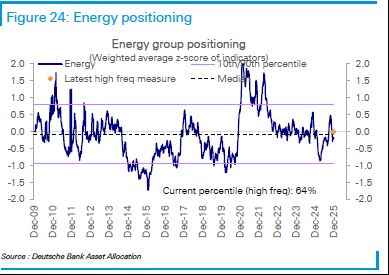
Despite the recent rally, data from Deutsche Bank AG reveals that investment in energy stocks remains below historical medians, indicating ongoing uncertainty in the sector. Furthermore, hedge funds have been actively net selling energy stocks, with these trades ranking among the largest across the S&P 500 in the previous week, as reported by Goldman Sachs Group Inc.’s prime brokerage. Predictions also suggest a substantial oversupply of crude oil is expected this year, raising concerns about the market’s longevity.
Geopolitical developments may contribute to the rally’s continuation. Some investors foresee potential benefits for U.S. oil companies as President Trump has urged these firms to revitalize Venezuela’s oil production. The rising tensions between the U.S. and Iran have also led to increased oil prices. Indeed, bullish call options for crude reached record volumes recently, driven by fears that protests in Iran might escalate, leading to disruptions in supply.
Conversely, a detente in the Middle East could stifle the surge in prices. For instance, last Thursday saw West Texas Intermediate drop significantly—the largest drop since June—following the U.S. decision to postpone any military response towards Iran. The S&P 500 Energy Index reflected this, decreasing by 0.9%.
There remains skepticism regarding the U.S. efforts to extract oil from Venezuela. Rebecca Babin, senior energy trader at CIBC Private Wealth Group, noted that any substantial involvement of U.S. companies would likely be a gradual process, necessitating significant investment and potentially impacting other ongoing projects.
Historically, geopolitical regime shifts in oil-rich nations have often led to pronounced price increases. Research from JPMorgan Chase & Co. indicates that, since 1979, eight similar events have triggered crude price surges of at least 30%, with some spikes reaching up to 76%, typically resulting in lasting changes in market dynamics.
In response to the shifting landscape, several major financial institutions have adopted a more optimistic outlook on oil prices. Citigroup Inc. has updated its near-term base case forecast for Brent crude to $70 per barrel, attributing this to escalating geopolitical risks linked to Iran and export disruptions from other nations like Libya and Algeria. Additionally, forecasts from BloombergNEF suggest even more dramatic scenarios, indicating that if Iran’s exports were fully halted, Brent prices could average $91 a barrel by late 2026—a scenario deemed unlikely but possible given the current regional tensions.