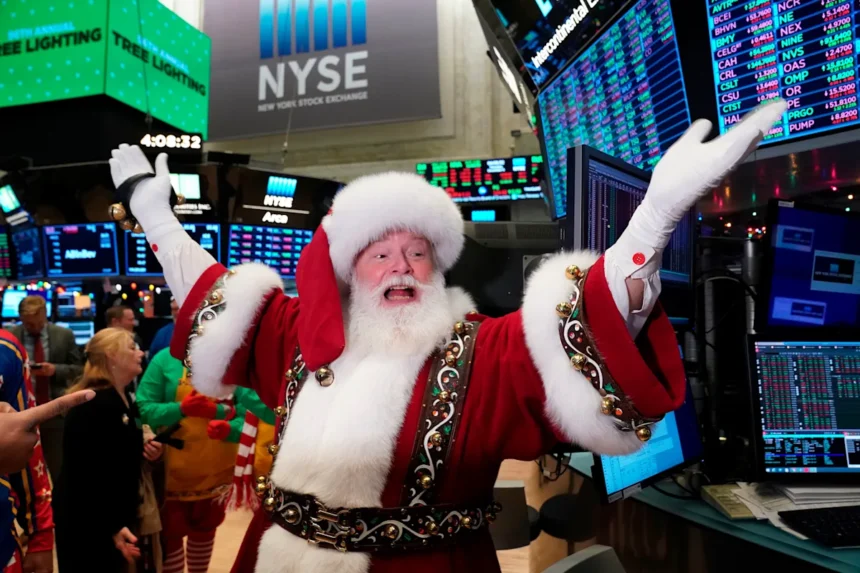
The holiday season typically ushers in a period of optimism on Wall Street known as the Santa Claus rally, characterized by a consistent rise in stock values post-Thanksgiving. However, financial strategists caution that this year might not follow the festive trend.
Amy Wu Silverman, head of derivatives strategy at RBC Capital Markets, highlighted a lack of adherence to the seasonal behavior generally expected this year. Throughout the year, various unexpected events, from the DeepSeek meltdown in February to President Trump’s abrupt tariff announcement in April, have contributed to a turbulent investment climate. The ongoing concerns surrounding artificial intelligence (AI) valuations have added to the uncertainty, creating a challenging environment for investors.
Analysts predict that the volatility experienced throughout the year may extend into December, further complicating the potential for a traditional Santa rally. Silverman noted the presence of increased bearish sentiment within the options market, as investors seek more downside protection instead of relying on the typical seasonal market strength.
While December has historically been a robust month for equities, the prospects for a Santa rally appear dim in what has been an unpredictable year. Omar Aguilar, CEO and chief investment officer of Schwab Asset Management, echoed the sentiment, observing discrepancies across various sectors and the challenges posed by uneven macroeconomic data following the government shutdown. He commented on the early indications of a shift in sector leadership and emphasized that the conditions conducive for a typical December market rally are not as robust as in previous years.
Mega-cap technology stocks, which have been instrumental in both driving market rallies and subsequent pullbacks, further complicate the situation. Aguilar also pointed out that the potential for a Federal Reserve rate cut could influence market sentiment, although the outcome remains uncertain. The expectation of rate cuts has fluctuated significantly, with current markets pricing in an 83% chance of a reduction by the end of the Fed’s December meeting, a marked increase from the approximately 30% chance just a week prior.
Despite the immediate uncertainties, many strategists maintain a bullish outlook for the longer term, projecting stock prices to continue climbing over the next 12 to 18 months. Some forecasts suggest targets as high as 8,000 for key indexes, supported by strong corporate earnings, particularly from the tech sector. According to FactSet, S&P 500 companies reported a 13.4% profit growth in the third quarter, driven largely by technology, marking the fourth consecutive quarter of double-digit growth.
As market participants navigate this tumultuous environment, Aguilar advised investors to take a proactive approach by rebalancing their portfolios. With the backdrop of evolving economic conditions and shifting market dynamics, practitioners are urged to stay vigilant and adaptive.