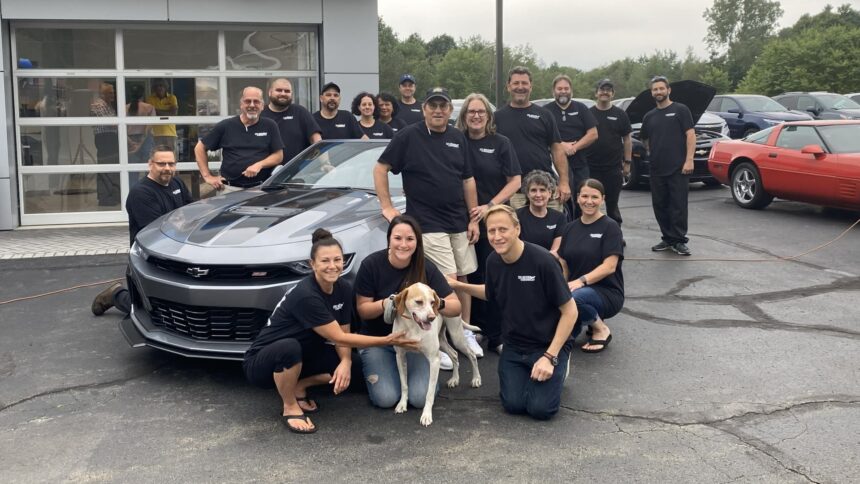
Derek Sylvester, a longstanding fixture in the automotive retail landscape, has officially transitioned the family-run Sylvester Chevrolet dealership, which has been a cornerstone of the Peckville, Pennsylvania community since its establishment in 1972. His father built the dealership from the ground up on Main Street, establishing a legacy that has spanned over five decades.
Recently, Sylvester and his family concluded a deal to sell the dealership to a New York-based dealer group. At 67, Derek has been contemplating retirement and noted that the current automotive market has become increasingly challenging for smaller dealerships. “Unless you’re a larger store, a much larger store, it’s a little bit harder to make money… It’s just scale,” he explained.
Although many family members intend to continue working at the dealership, the decision to sell was influenced by a rapidly evolving automotive retail landscape. This includes the rise of electric vehicles, advancements in technology like artificial intelligence, and increasing pressures from automakers.
Across the nation, smaller dealerships similar to Sylvester Chevrolet have been a part of a swift wave of acquisitions. Traditional dealerships have gradually transitioned into a lucrative market dominated by larger, consolidated entities. According to the National Automobile Dealers Association (NADA), the top 150 dealerships are responsible for a growing percentage of total vehicle sales, indicating a significant shift in the industry.
As new companies with substantial market capitalizations enter the market, the trend shows that consolidation is only set to accelerate. Publicly traded groups, such as Lithia Motors and AutoNation, have expanded significantly, further reshaping the landscape of automotive retail. Even online platforms like Carvana have begun exploring physical franchise acquisitions, hinting at future intentions to change the traditional retail model.
Industry experts have suggested that the marketplace is ripe for consolidation due to strong investor interest. Brian Gordon, president of dealer advisory firm Dave Cantin Group, remarked that external capital is making inroads into the dealership sector, creating a fertile environment for mergers and acquisitions.
The mounting pressure on smaller dealerships stems from various factors, including intense competition and challenges associated with succession planning. A NADA report indicates a decline in the number of dealers owning between one and five stores, confirming the consolidation trend.
Matthews Auto Group, which acquired Sylvester Chevrolet, reflects a strategy aimed at expansion and profitability in the highly competitive regions of New York and Pennsylvania. Rob Matthews, CEO of Matthews Auto Group, emphasized the need for dealerships to adapt and grow in order to remain competitive. The group’s acquisition strategy includes retaining current employees and providing enhanced resources to support the dealership’s ongoing operations.
The consolidation trend raises important implications for mom-and-pop dealerships, which face increasing challenges from new business models, including direct sales initiatives proposed by companies like Tesla. These developments indicate that the automotive retail landscape is experiencing significant transformations, further complicating the future for smaller, traditionally run dealerships like Sylvester Chevrolet.
Reflecting on his tenure in the industry, Derek Sylvester acknowledged the bittersweet nature of the change. “I lived a great life, don’t get me wrong. But, hey, good things come to an end,” he said, looking forward to retirement and a new chapter managing his 92-acre farm in Pennsylvania. The Sylvester family’s legacy will continue to resonate in the Peckville community, even as the dealership transitions to new ownership in the evolving automotive market.