Former UK Prime Minister Rishi Sunak has recently taken on a significant role as a senior adviser for tech companies Microsoft and Anthropic. His appointment comes following his tenure, during which he established an AI safety summit in 2023 in collaboration with these organizations. This strategic move highlights the growing intersection between political leadership and technological innovation, with Sunak set to leverage his experience in guiding discussions around artificial intelligence safety and regulation.
In another noteworthy development, a federal judge in New York has dismissed rapper Drake’s defamation lawsuit against Universal Music Group. The lawsuit arose from a Kendrick Lamar track that referenced Drake in a notorious context, labeling him a “paedophile.” The ruling marks an important moment in the ongoing discussions surrounding artistic expression and its implications in the realm of legal boundaries.
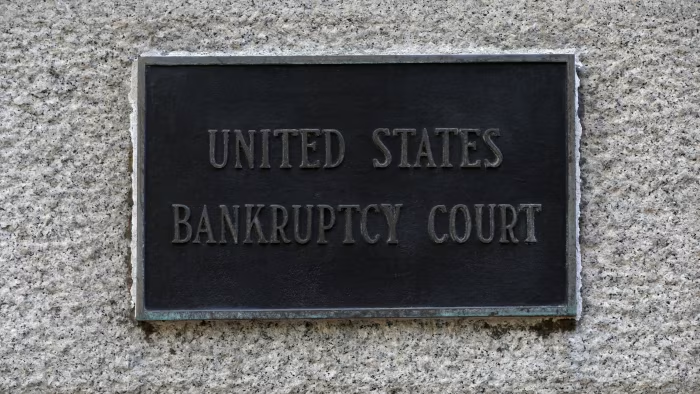
On the corporate finance front, a major bankruptcy case is unfolding involving First Brands, a car parts manufacturer burdened with $12 billion in debt. As the situation escalates, one of First Brands’ largest creditors, Raistone, has filed a motion for an independent investigation into the company’s finances. Raistone claims that approximately $2.3 billion has “simply vanished,” raising concerns about potential accounting irregularities.
Raistone, known for its off-balance-sheet financing strategies, is demanding that the investigation goes beyond the internal directors appointed by the company’s advisers. As authorities, including the US Department of Justice, begin to focus on the case, questions have emerged that span a wide network of financial stakeholders, including major investment banks and niche supply chain finance firms.
The fallout from First Brands’ collapse continues to reverberate across the financial landscape, with players like Jefferies and UBS being drawn into the fray. Raistone’s lawyer openly questioned First Brands’ financial practices, receiving a stark response indicating the dire state of the company’s funds and management.
In the world of sports investment, Ares Management has opted for a lenient approach towards Eagle Football Group, which holds significant debt obligations. Ares is charging the company high-interest rates on loans, yet has chosen not to seize assets, granting a 12-month grace period despite the firm facing technical defaults and a heavy financial burden.
Job movements in the financial industry include significant hires at firms like Andreessen Horowitz and Hg, illustrating the ongoing shifts in leadership within key investment firms. Notably, KPMG has also made strategic promotions to strengthen its transaction and corporate finance services.
As market analysts continue to scrutinize relationships and transactions affecting industries from tech to finance, recent reports indicate that while many US households have amassed significant wealth, the purchasing power has not kept pace, hinting at larger economic trends affecting consumer behavior and market dynamics.
Meanwhile, in the UK, regulators are closely monitoring the fallouts from First Brands and other financial disruptions in private credit markets. BP has also made headlines by winning an arbitration case related to disputed LNG cargoes, showcasing the complexities of international trade and energy sectors.
While discussions around consolidation among regional US banks are heating up, various companies are executing significant M&A strategies, including Novo Nordisk’s planned acquisition of US biotech firm Akero and HSBC’s substantial bid to control Hong Kong lender Hang Seng.
The landscape remains dynamic, with a mix of challenges and opportunities shaping the future of industries and investments alike.