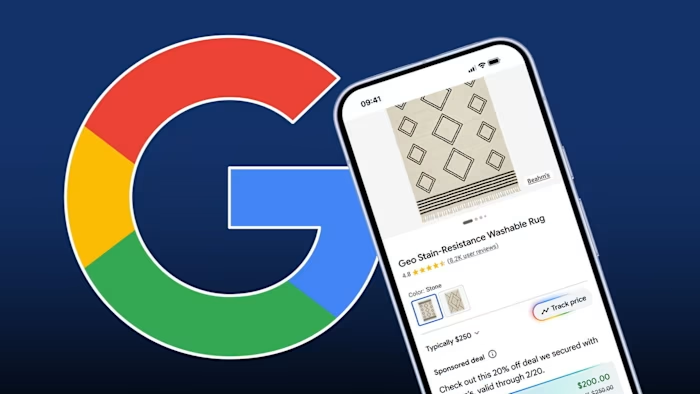
Google is set to enhance its AI shopping tools with a new personalised advertising feature aimed at advertisers and consumers alike, as the tech giant seeks to monetise its chatbot services while competing with OpenAI. Announced on Sunday, this innovation allows advertisers to present exclusive offers to shoppers in Google’s AI mode, which is driven by its advanced Gemini model.
The new initiative is part of Google’s broader strategy to carve out a competitive edge in the rapidly evolving landscape of AI chatbot monetisation. With the recent success of Gemini 3, which is gaining traction against OpenAI’s GPT-5, Google’s shift into personalised advertising marks a significant departure from its established sponsored ad placements in search results. Traditionally, these placements have brought in tens of billions in revenue but now face challenges from the increasing popularity of AI-driven solutions.
Vidhya Srinivasan, Google’s vice-president of Ads and Commerce, highlighted that this new approach offers retailers enhanced flexibility to provide value to consumers in AI mode, such as through discounts, special bundles, or free shipping—targeting shoppers at the critical moment they are poised to make purchases. The AI system will leverage users’ shopping behaviour and preferences to determine when to present these offers.
This new advertising capability positions Google ahead of its competitors by enabling brands to deliver highly personalised promotions through the chatbot. OpenAI recently paused discussions on its advertising products, primarily to address internal concerns about the competitiveness of its ChatGPT platform. In contrast, Google is utilising its extensive online search market share to promote its AI features to billions of potential users.
In the past year, various AI firms, including OpenAI and Microsoft, have launched e-commerce functionalities within their respective chatbots to diversify their revenue streams. OpenAI has rolled out a checkout feature allowing it to take a commission on sales made via ChatGPT, while Microsoft introduced its Copilot Checkout, reportedly boosting purchase rates by 53% within 30 minutes of interaction.
In addition to its advertising innovations, Google recently introduced a “universal commerce protocol” designed to facilitate product research and transactions directly within its platform. Developed in collaboration with major retailers such as Walmart, Target, and Shopify, this protocol underscores the importance of strategic partnerships in the retail space.
Sundar Pichai, Google’s CEO, emphasized the potential for collaborative growth within the retail sector, suggesting that effective cooperation during this transformative period could lead to significant opportunities. The new ads feature will harness contextual insights from users’ interactions with the chatbot to deliver pertinent offers on products they have displayed interest in.
Retailers will have the option to establish various types of offers, with initial focus on discounts. Google intends to broaden the capabilities of this feature over time, including options that enhance the shopping experience beyond mere price reductions, such as bundles or complimentary shipping. Existing partnerships with brands like Petco, e.l.f. Cosmetics, and Samsonite illustrate Google’s commitment to enhancing the retail experience through its AI capabilities.