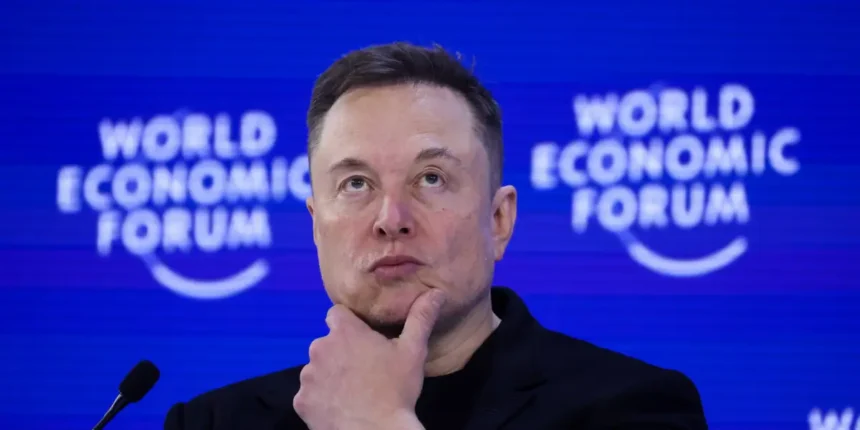
Speculation surrounding a potential merger between Tesla and SpaceX is intensifying, as Gwynne Shotwell, president of SpaceX, addressed the topic in a recent CNBC interview. Shotwell indicated that both companies, under Elon Musk’s leadership, are aligned in their overarching goals and hinted at the possibility of a future merger. “That might make Elon’s life a little easier, actually,” she stated, noting the abundance of synergies between the two firms.
Despite acknowledging the significant shared vision, Shotwell emphasized her current focus on SpaceX’s immediate operational needs and ambitious expansion initiatives rather than the potential of a merger. “I’m not focused on that part of the future, at least,” she remarked, underscoring her commitment to maintaining SpaceX’s operations.
The dialogue surrounding a Tesla-SpaceX merger is not new; Musk has been contemplating greater integration across his various ventures for several years. Recently, analysts and investors have increasingly suggested that a merger could soon materialize.
Historically, Tesla and SpaceX have collaborated on various projects, sharing personnel and board members. One notable initiative is the “Terafab” project, with a proposed investment of $55 billion aimed at developing semiconductors to support SpaceX’s AI satellites and Tesla’s evolving technologies, including robotaxis and humanoid robots. Furthermore, Tesla has integrated advanced AI capabilities with the incorporation of xAI’s Grok AI model into its vehicles. Last year, the company made a significant $2 billion investment in Musk’s AI startup, which later transitioned into partial ownership of SpaceX post-merger with xAI.
Analyst Dan Ives from Wedbush Securities, a well-known advocate for Tesla, expressed optimistic forecasts in a recent note, predicting that Tesla and SpaceX could merge next year. Ives described such a consolidation as the “holy grail,” highlighting the potential for Musk to significantly bolster his presence in the growing AI economy.
As the discourse unfolds, SpaceX prepares for its investor debut following a historic $75 billion initial public offering (IPO), which has positioned the rocket firm with a valuation of $1.75 trillion—surpassing Tesla’s current market cap of $1.25 trillion. This IPO places Musk in a unique position as the CEO of two publicly traded companies, leading to heightened scrutiny from Tesla investors regarding his time management between the two major enterprises.
Amid this scrutiny, Musk has received substantial financial incentives from Tesla shareholders, including a potentially monumental pay package valued up to $1 trillion, contingent on meeting ambitious performance goals. Similarly, he stands to gain a comparable arrangement from SpaceX, which is tied to the company’s goal of establishing a human colony on Mars.
As discussions around a merger gain traction, the future of both companies remains closely intertwined, with Musk at the helm of both adventures in electric vehicles and space exploration.