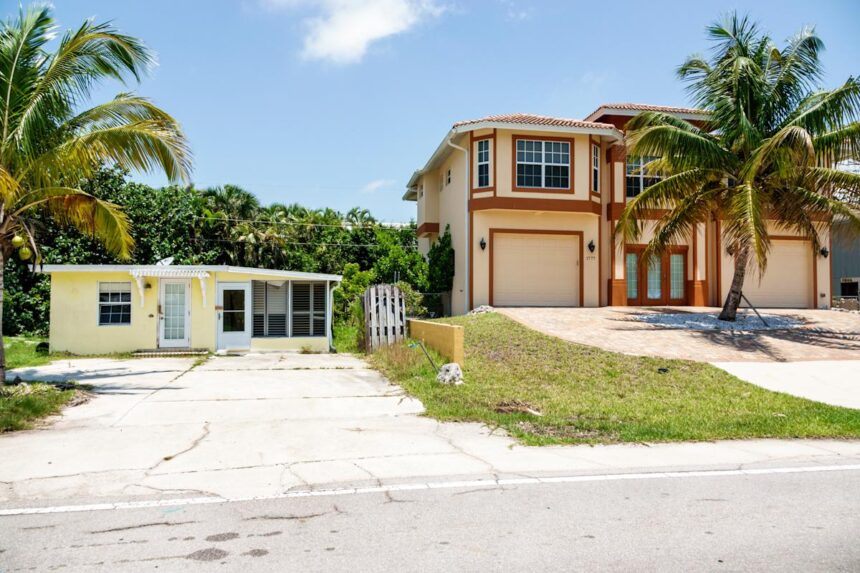
This spring, the housing market is showcasing a stark division between high-end and lower-end properties, illustrating the complexities of the current economic landscape. The trend towards luxury homes has gained significant momentum, with sales of properties priced above $1 million experiencing a remarkable increase—growing faster than any other segment of the real estate market. Conversely, the market for more affordable homes, specifically those priced under $250,000, has suffered a decline over the past year.
This phenomenon highlights the ongoing K-shaped economic recovery, where high-income households flourish while lower- and middle-income families struggle as the cost of living continues to rise. Such disparities can intensify the existing wealth gap, as established homeowners enjoy accumulating home equity, while first-time buyers find it increasingly difficult to enter the market.
Selma Hepp, chief economist at Cotality, notes that the current economic conditions allow higher-income households to thrive in various sectors, including real estate. These households tend to be more insulated from the impacts of inflation and often possess considerable investments, enabling them to capitalize on the recent peaks in equity markets. Lawrence Yun, chief economist at the National Association of Realtors, supports this observation by pointing out that the rise in luxury home sales may correlate with the overall bullish trends in the stock market, which are at historically high levels.
Recent statistics from the National Association of Realtors indicate that home sales at the over-$1 million price point surged by 9.3% compared to last year. In contrast, sales in the $250,000 to $1 million range have been sluggish, with those priced between $100,000 and $249,999 seeing a slight decrease of 1.3%. Many current homeowners, having capitalized on favorable purchasing timings, are now reaping substantial home equity gains.
Real estate agent Marcus Auerbach from Whitefish Bay, Wisconsin, has observed the favorable conditions for “move-up buyers,” many of whom have seen their home equity dramatically increase. He mentions instances where homeowners who purchased starter homes just five years ago are now exiting the market with equity gains between $200,000 and $250,000, making it easier for them to upgrade to higher-end properties.
In Milwaukee’s suburbs, properties priced at around $800,000 and above are seeing robust sales activity, with a noticeable rise in all-cash offers. Meanwhile, homes at more moderate price points are lingering on the market for longer periods, prompting Auerbach to note the rising costs in areas that were once more affordable.
Similar trends are evident in the new construction sector. PulteGroup, one of the largest homebuilders in the nation, reports a strong demand for move-up homes and high-end options, while first-time buyers continue to grapple with issues of affordability and job security. This evidence is echoed through the experiences of individuals like Faith D., a 26-year-old searching for her first home in eastern Tennessee. She finds herself facing skyrocketing prices that render low-cost homes almost nonexistent in her hometown. After one disappointing contract that revealed significant issues, she is once again trying to navigate a challenging market where adequate properties seem increasingly out of reach.
In stark contrast to Faith’s search for affordable options, higher-end listings proliferate in her community, particularly in an area where the median household income is less than $50,000. She and her real estate agent speculate that such high-priced homes might be appealing to affluent newcomers or vacationers, rather than local residents.
The current state of the housing market serves as a reflection of wider economic divides, underscoring the challenges faced by prospective first-time buyers in today’s environment. As the disparity between segments continues to grow, questions surrounding affordability and equitable access to homeownership remain crucial to the ongoing economic conversation.