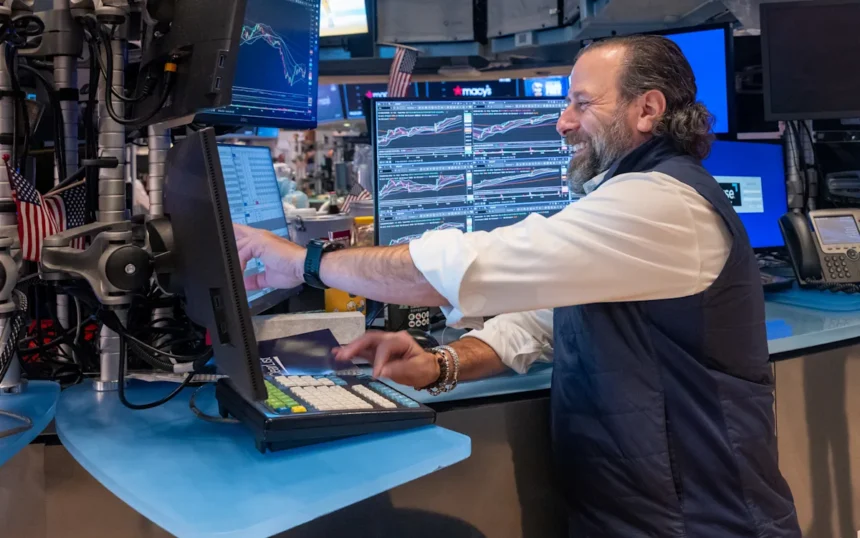
As December unfolds, investors are hoping for a more stable month after a turbulent November that saw the Nasdaq Composite snap a seven-month winning streak. The S&P 500, meanwhile, moved within 1% of its record high. On the last trading day of November, markets ended on a positive note, marking five consecutive gains in a holiday-shortened session. Despite its recent difficulties, the Nasdaq is just 3% away from its all-time high, while the Dow is nearly 2% from its record close.
However, the past month’s volatility was driven largely by anxiety over a potential AI bubble, adversely affecting key players in the technology sector. Notably, shares of Meta have dropped 13%, Nvidia fell about 8%, and Oracle’s stock plunged nearly 30%. On a different trajectory, Google has seen its stock rise about 20%, buoyed by a strong earnings report and a favorable market reaction to its Gemini 3 model, as well as a significant AI chip deal with Meta.
Investors will turn their attention this coming week to the likelihood of a rate cut at the Federal Reserve’s December meeting. Current forecasts estimate an 86.9% chance of a quarter-point reduction. The Fed has entered a blackout period ahead of its scheduled meetings on December 9-10, leading to a quieter week for market-moving news.
Moreover, reports suggest that the Trump administration is nearing a decision on a candidate to succeed Jerome Powell as Fed chair, with Kevin Hassett, a former National Economic Council director, emerging as a leading candidate.
On the economic front, following the disarray caused by the recent U.S. government shutdown, data collection is slowly returning to normal. This week will highlight private reports on U.S. manufacturing and service sector activity, along with ADP’s monthly private payrolls report. The corporate earnings landscape includes reports from budget retailers Dollar Tree, Dollar General, and Five Below, alongside tech firms such as Salesforce and CrowdStrike.
In contrast to the market’s struggles, some investors are receiving bearish signals. Renowned short sellers, including Michael Burry and Jim Chanos, have voiced concerns about investments in AI. Nvidia’s management also faced backlash over a poorly received letter attempting to distance the company from structural issues reminiscent of Enron. Major U.S. retailers reported mixed results for their third-quarter earnings as consumers grapple with rising prices.
In a more optimistic vein, strategists at JPMorgan Financial predict that the S&P 500, currently valued at 6,849, could soar to 7,500 by the end of 2026, representing nearly a 10% increase. If the Federal Reserve continues its rate-cutting strategy, there’s potential for the index to exceed 8,000. They attribute this positive outlook to resilience in the U.S. economy and an AI-driven supercycle that is stimulating record levels of capital expenditure and earnings growth.
Similarly, HSBC and Deutsche Bank also share bullish forecasts, with expectations that the index will hit 7,500 and 8,000, respectively, driven by the AI boom. Both firms believe that the current environment mirrors the late 1990s tech boom, wherein technology leads the charge and high return concentration persists.
Despite these forecasts, Deutsche Bank analysts warn of potential volatility in the near term as markets navigate between boom and bust narratives. They emphasize that, given the rapid pace of technological advancement, meaningful productivity gains are likely to emerge in the coming years. Meanwhile, market participants should brace for heightened volatility as they pursue attractive long-term returns.
The upcoming economic calendar includes a range of data releases, including the Manufacturing PMI, ADP employment change, and various other economic indicators, alongside a series of earnings reports from various companies across sectors. As investors prepare for the future, the lessons learned from November’s market shifts may serve as a vital guide in navigating the potential challenges and opportunities ahead.