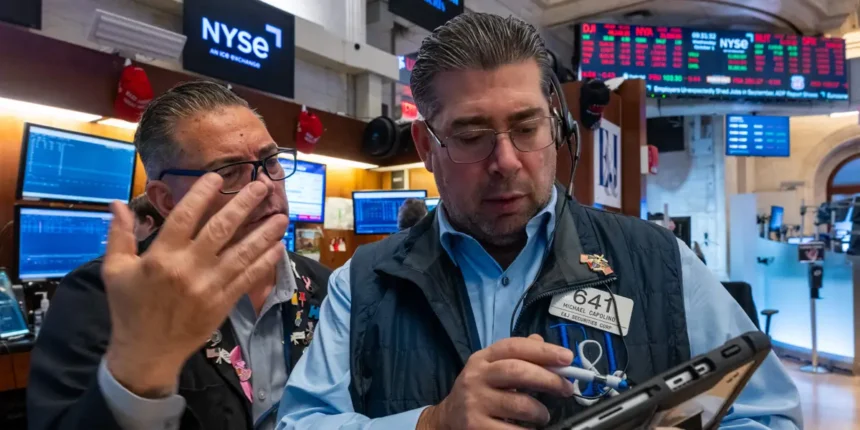
This week, a significant shift in investor sentiment regarding the AI sector became evident as major companies faced a pronounced sell-off. High-profile leaders in AI, including Nvidia, Meta, and Palantir, experienced steep declines, reflecting growing concerns that tech stocks may have soared too high, too quickly. The prevailing optimism surrounding AI appears to be waning, with key indicators suggesting a more cautious approach among investors.
A critical voice in this conversation is Michael Burry, the famed investor known for his role in predicting the 2008 housing crash. After a lengthy hiatus, Burry resurfaced on social media to caution about potential market bubbles. He cryptically advised, “Sometimes, the only winning move is not to play.” The regulatory filings from his firm, Scion Asset Management, revealed that it had placed bets against prominent AI stocks like Palantir and Nvidia. These developments prompted some investors to realize profits, particularly in the AI sector, contributing to the recent downturn.
Valuation concerns also loomed large in investors’ minds this week, as the meteoric rise of tech stocks raised alarms about overvaluation. This issue, while persistent for years, gained renewed attention as the market reflected on the extensive gains made since the emergence of ChatGPT. Following the previous week’s close, some of the largest names in the tech landscape experienced notable declines: Nvidia dipped 1.08%, Palantir fell 8.35%, AMD decreased 2.42%, Broadcom was down 1.85%, and Meta finished the week down 1.89%. Commentary from influential figures such as Goldman Sachs CEO David Solomon, who predicted a potential correction of 10 to 20% in the equity markets within the next year or two, further fueled these concerns.
The sell-off was particularly pronounced for Palantir, which reported third-quarter earnings exceeding expectations with $1.18 billion in revenue compared to an anticipated $1.09 billion. However, instead of rallying, the stock plummeted by 8% post-report, showcasing that even robust earnings were not enough to counteract the prevailing sentiment surrounding overvaluation. David Rosenberg, president of Rosenberg Research, noted that high valuations might have overshadowed positive company performance in the eyes of investors.
Meta’s situation mirrored these valuation anxieties, with the company announcing intentions to ramp up capital expenditures related to AI, forecasting spending between $70 billion and $72 billion—higher than its previous guidance. The announcement led to a significant decline in Meta’s stock, which dropped as much as 14% following the news, reflecting skepticism regarding the large sums of money being directed towards AI initiatives. Continuing a downward trend, shares further decreased by 1.2% from the prior week’s close.
The combined financial outlook for several tech giants, including Amazon, Microsoft, Alphabet, and Apple, indicates an expected annual spending of around $349 billion on capital expenditures. This heightened investment in AI has become a “yellow flag,” as described by Peter Berezin, chief market strategist at BCA Research. Investors are becoming increasingly wary that if companies do not meet their ambitious growth targets, they may incur significant losses.
As the market grapples with these developments, the once seemingly boundless enthusiasm for AI is giving way to a more restrained perspective, underscoring the complexities and risks inherent in the current stock environment.