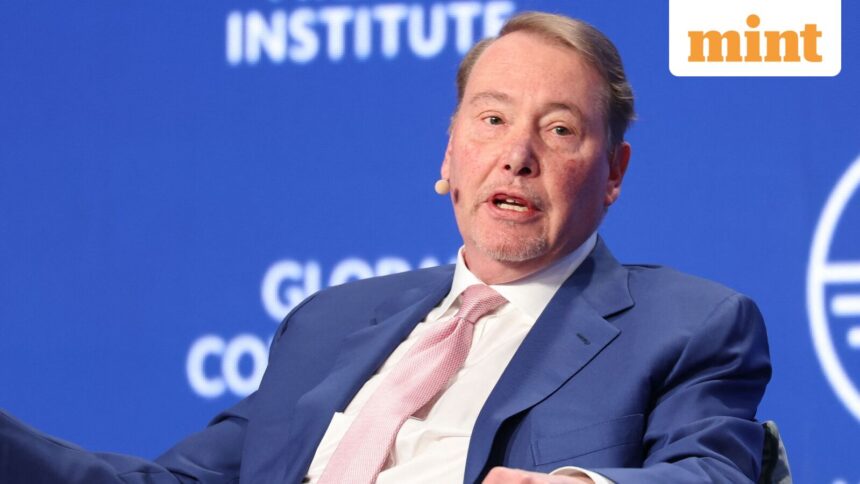
Jeffrey Gundlach, the chief investment officer at DoubleLine Capital, has made headlines with his latest investment guidance for 2026, advocating for a shift towards cash, gold, and tangible assets. In an interview with Bloomberg, Gundlach, often dubbed the “Bond King,” expressed concerns about the potential negative impact on stocks and other risk-oriented investments if the U.S. Federal Reserve decides to raise interest rates instead of cutting them.
Despite earlier projections hinting at two to three Fed rate cuts for 2026, Gundlach has revised his stance, suggesting that such cuts may not materialize. He emphasized that any market optimism based only on the expectation of two rate cuts is misplaced. “If you’re buying risk assets on the back of only two rate cuts — your high conviction idea — you’re back on the wrong horse,” he remarked, underlining that no rate cuts are anticipated this year.
This cautious outlook comes in the context of recent market dynamics, where hopes of rate cuts previously fueled a market rally. However, escalating tensions in the Iran conflict have contributed to rising oil prices, spurring inflation fears and dampening expectations for lower interest rates. Gundlach noted that stock valuations appear elevated, especially as major indexes have reached new highs, all while the U.S. and Iran have yet to reach any official peace agreements.
In terms of portfolio recommendations, Gundlach continues to advise that investors maintain 20% in cash, consistent with his guidance from the previous year. Additionally, he suggests increasing the allocation to hard assets such as commodities to 20%, a notable rise from last year’s recommendation of 10% to 15%. He expressed enthusiasm for gold, stating that if the price dips below $3,500 an ounce, he would be ready to buy in significant amounts. Although he refrained from specifying a fixed percentage for gold allocations, he previously indicated that holding up to 25% in gold bullion would not be excessive.
Further complicating the investment landscape, Gundlach has begun repositioning some of his funds to prepare for the possibility of a U.S. government debt restructuring in the face of a future recession. He posited that while it is a remote possibility, the government might find it necessary to replace higher-interest Treasury bonds with those offering lower yields as a means of managing its fiscal obligations. To mitigate this risk, Gundlach has started replacing higher-coupon Treasuries in certain portfolios with lower-coupon options of similar maturity.
He raised concerns that the U.S. government could potentially unilaterally reduce coupons on outstanding debt, lowering them from rates like 4% to as low as 1%, without altering the maturity dates. This act, he suggested, would represent a drastic measure to “kick the can down the road” in managing escalating interest payments during economic downturns.
Overall, Gundlach’s insights reflect a cautious and strategic approach to investing in an uncertain economic environment, emphasizing the importance of adaptability and preparedness for potential shifts in fiscal policy.