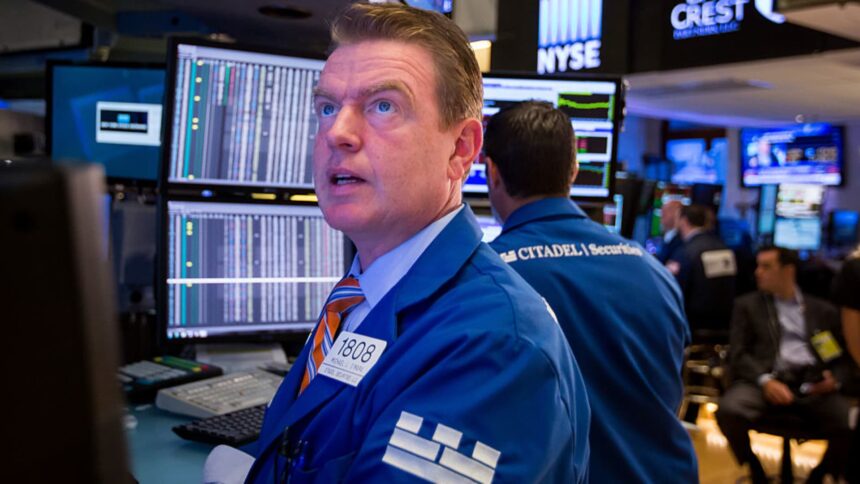
Oil prices surged last week due to the ongoing conflict in Iran, leading to a significant downturn in stock markets, marked by the S&P 500 experiencing its first three-week losing streak in nearly a year. In this climate, only two of the 11 S&P 500 sector indexes managed to post gains, specifically in energy and utilities. Brent crude, the international oil benchmark, rose by over 11%, while West Texas Intermediate (WTI) surged by 8%. Notably, Brent settled above $100 per barrel for the first time since 2022 on Thursday, with prices briefly exceeding $119 on Monday before leveling out.
As the S&P 500 dropped by 1.6% for the week, market analysts took note of the potential for ongoing volatility. Jim Cramer, a prominent financial commentator, emphasized that the conflict’s impact would keep turbulence alive in the market, particularly as Iran continues to threaten oil shipping routes such as the Strait of Hormuz. He cautioned investors against making hasty decisions to exit the stock market entirely, warning that such actions could lead to missing out on potential rebounds once stability returns.
Despite the troubling market conditions, Cramer advised a more strategic approach. Early in the week, he recommended investors maintain their positions while staying alert to market movements. On Wednesday, he acted on an oversold signal from the S&P Short Range Oscillator, recommending an increase in holdings of Procter & Gamble. The following session, the team released a shopping list of five stocks, despite some restrictions on trading. By Friday, they managed to purchase shares of Alphabet, reflecting a tactical buy-in as the Oscillator suggested a possible drop to minus-10%, a historically favorable buying point.
Amid these developments, concerns about stagflation—characterized by high inflation coupled with stagnant economic growth—emerged alongside the oil price surge. Important economic reports, including the Consumer Price Index and the Personal Consumption Expenditures Price Index, took a backseat to worries about rising prices after the U.S. and Israel took military actions against Iran. Investors are increasingly recalling the stagflation era of the 1970s, during which the S&P 500 suffered a significant decline amidst the OPEC oil crisis, leading to apprehension regarding the Federal Reserve’s potential interest rate cuts.
In terms of cybersecurity, CrowdStrike emerged as a strong performer, with the stock advancing 3% for the week. The ongoing conflict heightened concerns about cyber threats, particularly with the CEO of CrowdStrike, George Kurtz, cautioning about an increase in cyberattacks linked to the war in Iran. Notably, shortly after Kurtz’s remarks, medtech firm Stryker reported a cyberattack that appeared linked to the conflict. Cramer highlighted three reasons why CrowdStrike represents a compelling investment during the conflict and maintained a buy-equivalent rating on the shares with a price target of $500, while consolidating the portfolio’s cyber exposure around this single name.
As Cramer and his team navigate these turbulent waters, the focus remains on adapting strategies that encompass both current events and long-term potential, offering insight and guidance to investors aiming to weather the storm.