IREN has announced a significant expansion of its AI cloud capacity, acquiring an additional 12,400 GPUs to bring the total to 23,000. The company projects that this expansion could generate more than $500 million in annualized run-rate revenue by the first quarter of 2026. The announcement, made on Monday, led to a 9% increase in IREN’s shares during premarket trading, pushing the stock’s value to nearly $42, continuing an upward trend that saw it reach record highs above $38 last week.
The substantial order, valued at $674 million, includes a diverse range of GPUs: 7,100 Nvidia B300s, 4,200 Nvidia B200s, and 1,100 AMD MI350X units. This addition not only enhances IREN’s infrastructure but also broadens its offerings beyond Nvidia hardware, indicating a strategic shift towards a multi-source supply chain for its computing needs.
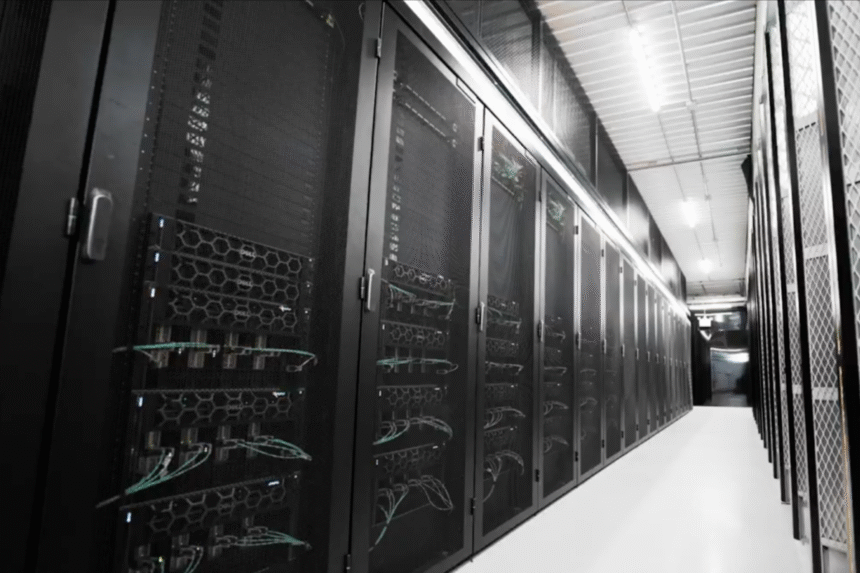
The delivery of the GPUs is set to occur over the next few months at IREN’s campus located in Prince George, British Columbia. This site is designed with expansion in mind and has the potential to host more than 60,000 Blackwell GPUs. Furthermore, the company is exploring additional opportunities for growth at its facilities in Texas.
Once the new units are integrated, IREN’s GPU fleet will comprise approximately 23,000 units, which includes 1,900 Nvidia H100s and H200s, 19,100 B200s and B300s, as well as 1,200 GB300s and 1,100 AMD MI350Xs. IREN has also reported that it is currently engaged in discussions with customers regarding multi-thousand-GPU cluster arrangements. The demand for computational resources continues to exceed global supply, prompting many customers to pre-contract capacity ahead of actual delivery.
Historically known for its large-scale bitcoin mining operations, which have a capacity of about 50 EH/s, IREN is actively reorienting its data center capabilities to focus on AI processing. The company is in the midst of financing discussions to support this expansion initiative. However, it asserts that any potential impact on its bitcoin mining operations will be alleviated by redistributing ASIC miners to its other sites.