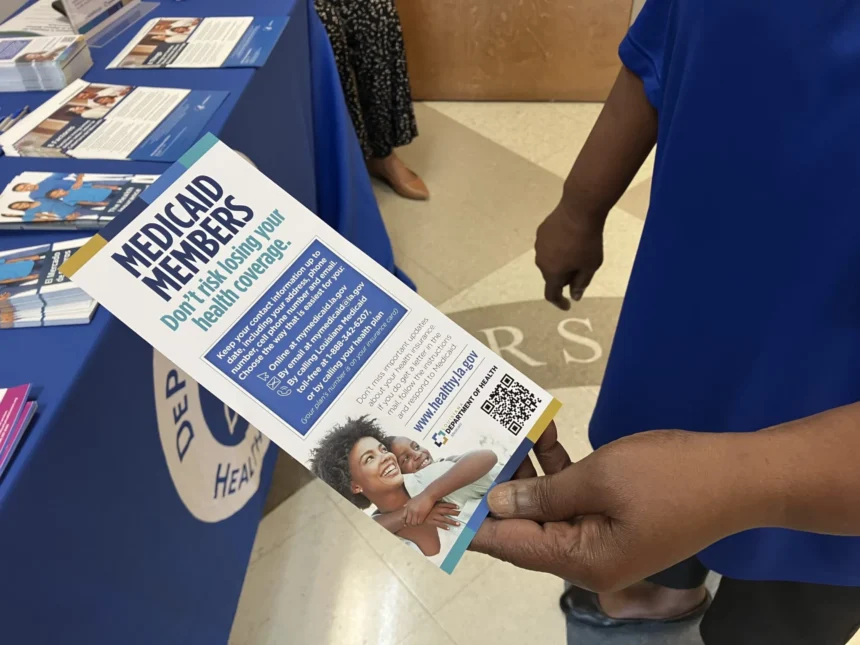
The administration of Gov. Jeff Landry has made a significant change to its Medicaid contract plans, opting to cancel only one of its contracts with private managed care organizations instead of two as it initially intended. On Tuesday morning, the Louisiana Department of Health (LDH) announced its decision to retain Aetna Better Health of Louisiana, which provides coverage for approximately 157,000 Medicaid residents in the state. This decision follows a notice sent to Aetna just a week prior indicating that its contract would terminate at the end of December.
State Medicaid Director Seth Gold communicated the reversal in a letter to Aetna’s CEO, affirming that LDH will renew the managed care organization contract with them. A spokesperson for Aetna assured stakeholders that operations would continue as normal, emphasizing their commitment to supporting members and healthcare providers.
Conversely, the administration remains firm in its plan to terminate the contract with UnitedHealthcare of Louisiana, which serves about 330,700 Medicaid enrollees, by the end of the month. Health Secretary Bruce Greenstein stated that affected members would be transitioned to one of the remaining five managed care organizations in the upcoming weeks. The contract with UnitedHealthcare was projected to be worth approximately $4.2 billion for the 2026 calendar year, making up around a quarter of the total 1.4 million Medicaid enrollees covered through private companies.
The push to terminate the UnitedHealthcare contract stems from ongoing litigation spearheaded by Attorney General Liz Murrill. Murrill has been pursuing legal action against UnitedHealthcare and its pharmacy benefits manager, OptumRx, alleging that they overcharged Louisiana’s Medicaid program for prescription drugs. After Landry filed the initial suit in 2022, Murrill took over the case following her election to the attorney general’s office in 2024. Recent court developments, including a ruling from the Louisiana First Circuit Court of Appeal that overturned a favorable decision for the state, have complicated these legal efforts.
Murrill accused UnitedHealthcare of contract violations and failure to provide requested documentation, further complicating the relationship. Although she was unavailable for comment due to her attendance at a human trafficking conference in Rome, her concerns reflect a growing unease regarding the ongoing negotiations with the company.
In response, UnitedHealthcare maintained that it has consistently adhered to Louisiana’s laws and Medicaid contract regulations while remaining compliant with state requests for documentation. This defense came amid rising tensions as the administration’s decisions surprised many lawmakers who had recently endorsed the UnitedHealthcare agreement based on Landry’s prior assurances.
During a nearly three-hour legislative hearing, Greenstein and Health Department Undersecretary Drew Maranto, both appointed by Landry, faced extensive questioning from lawmakers. Notably, they did not express any reservations about their engagement with UnitedHealthcare, despite potential concerns raised by legislators regarding the number of Medicaid contracts. Lawmakers have suggested that consolidating these contracts could lead to lower administrative costs; however, Greenstein argued that the diverse approaches offered by multiple plans are essential for managing patients with complex medical needs.
Several legislators reported feeling blindsided by the abrupt cancellation of the contract extensions with both Aetna and UnitedHealthcare, expressing frustration that they were not given prior notice about the administration’s shift in strategy. As the situation develops, the implications for Louisiana’s Medicaid program and the residents it serves remain uncertain, with a transition plan for affected UnitedHealthcare members soon to be implemented.