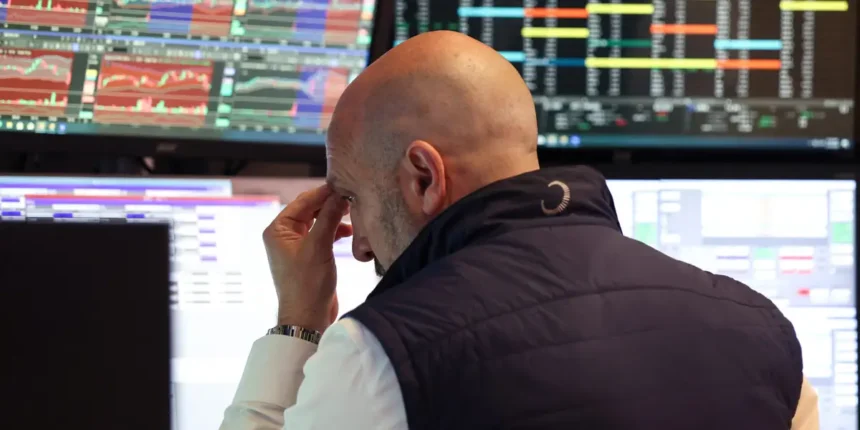
As a full-time trader, Erik Smolinski is keenly attuned to the fluctuations in the markets. Recent developments, he notes, have rendered market conditions particularly intriguing. Having begun his trading career in 2007, Smolinski consistently outperforms the S&P 500, and he describes the current market situation as “anomalous.”
Stocks have recently enjoyed a record surge, with investors seemingly unfazed by ongoing geopolitical tensions, including the Iran war. Stellar corporate earnings have further fueled a robust bullish sentiment. Yet, the landscape surrounding interest rates has become increasingly complex. Investors are grappling with the likelihood that the Federal Reserve may need to maintain elevated rates for an extended period—or even consider raising them—if inflationary pressures remain persistent.
Smolinski perceives this evolving scenario as a distinctive moment in the market. While he does not advocate for panic, he believes it’s crucial for investors to remain vigilant and possibly recalibrate their strategies. His advice to everyday investors is clear: avoid making emotionally driven decisions simply because stock prices are nearing all-time highs; instead, he encourages a thorough review of one’s investment holdings.
He cautions against panic selling, emphasizing that markets often hover around all-time highs. “The train is never late,” he remarked, asserting that the market spends a significant amount of time at these elevated levels. While it is common for investors to feel apprehensive during such peaks, he argues that this should not lead to a retreat from risk. “If you get too hesitant on risk, it’s kind of like, what are you doing here?” he posed, underscoring the inherent risks that come with equity investing.
Smolinski advises that all-time highs alone do not justify selling investments. He warns investors not to be swayed by media narratives predicting market collapses. According to him, the most critical signals come from the bond market. He emphasizes the need to focus not solely on the level of bond yields but rather on the rate of change. A gradual rise toward 5% yields associated with robust economic growth contrasts starkly with a sharp, disordered spike in yields, which could pose risks to equities.
Moreover, he stresses the significance of real yields, which account for inflation. A 5% yield on a 10-year Treasury carries different implications depending on whether inflation is at 2% or 4%. As real yields approach their recent highs, he believes bonds could begin to compete with stocks for capital. Smolinski further points out the need to comprehend the underlying drivers of rising yields, noting that a sell-off due to strong growth is far less concerning than one driven by resurgent inflation or fiscal worries.
At the point of his insights, the bond market suggested that investors should not expect a smooth, downward trajectory for rates. He referenced the CME FedWatch Tool, which tracks market expectations for Federal Reserve interest rate decisions, indicating a potential rate hike rather than a cut in the near future. Smolinski considers this landscape significant, especially given the fact that stock prices are at record highs amidst changing rate expectations.
He highlighted a notable tension: stock markets are achieving unprecedented highs while leverage appears extreme by historical standards. This confluence of factors suggests a volatile mix for investors.
While Smolinski does not recommend drastic portfolio adjustments—stressing that this is not the moment for sweeping sell-offs or impulsive investments in gold—he advocates for an introspective review of one’s portfolio. Investors should ensure they are comfortable with their holdings and prepared for a potentially tougher interest rate environment.
He encourages assessing whether portfolios are overly concentrated in any single stock, sector, or investment theme, and advocates for confirming that asset allocations are in alignment with individual risk tolerances and investment time horizons. Ultimately, he emphasizes that understanding one’s investments well enough will enable an investor to hold onto them through changing market conditions.
In summary, while current record highs may appear daunting, they should not trigger hasty exits from the market. Instead, now is an opportune moment for investors to refine their portfolios and ensure their strategies align with evolving conditions.