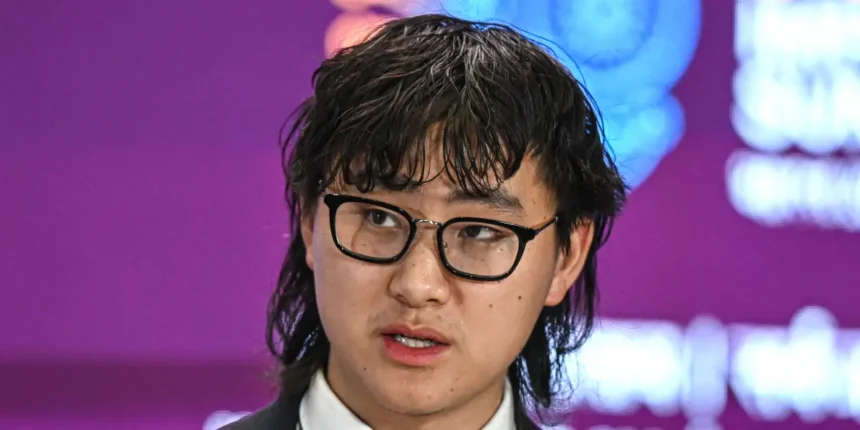
Meta is making strides in the competitive AI landscape, as disclosed by Alexandr Wang, the company’s superintelligence chief, during an internal town hall. Wang reported that Meta’s upcoming AI model, codenamed Watermelon, has successfully caught up with OpenAI’s flagship GPT-5.5 model, a significant development based on key AI model benchmarks. While the specific benchmarks were not detailed, the implications of this advancement are considerable.
Wang mentioned that “Watermelon,” which follows the previously launched Avocado model, is currently in the training phase. He stated that this new model utilizes a vast amount of computational resources, considerably surpassing those of Avocado, which was Meta’s initial entry into this model family released earlier in April under the name Muse Spark.
In addition to his internal comments, Wang also took to X to share that an update to the Muse Spark model is imminent, featuring major improvements in coding capabilities and agentic functions intended to bridge the gap with competitors. When questioned about when Meta would introduce a coding model on par with Anthropic’s Claude Opus, Wang hinted that it would happen “pretty soon” and assured users that significant advancements are underway.
Meta’s ambitions in artificial intelligence have been clear: to compete at the forefront with industry leaders such as OpenAI, Google, and Anthropic. Despite substantial investments in data centers, chips, and talent, the company has faced challenges in establishing itself as a leading force in the sector. If Wang’s statements hold true, this could indicate that Meta’s extensive investments and founder Mark Zuckerberg’s relentless efforts to attract top talent are beginning to yield results, even as the race intensifies.
OpenAI’s GPT-5.5, released in April, has been a benchmark of power, with the company subsequently unveiling GPT-5.6 late last month, although it has not been made widely available yet due to requests from the U.S. government.
Meta chose not to comment on this recent development, and OpenAI has also remained silent regarding requests for further information. Earlier this year, Meta launched Muse Spark, which showed competitive performance on benchmarks but did not surpass the capabilities seen in models from OpenAI or Anthropic.
Zuckerberg has emphasized the need for Meta to lead in AI, appointing Wang as head of their efforts and rebranding the AI division to Meta Superintelligence Labs. Under Wang’s leadership, a team of elite researchers known as TBD is driving these initiatives, alongside significant investments in hardware and infrastructure. Reports suggest that Meta is prepared to allocate between $125 billion and $145 billion this year on chips, data centers, and other essential infrastructure, an increase from previous estimates, reflecting a commitment to overcoming rising costs and expanding its technological capabilities.