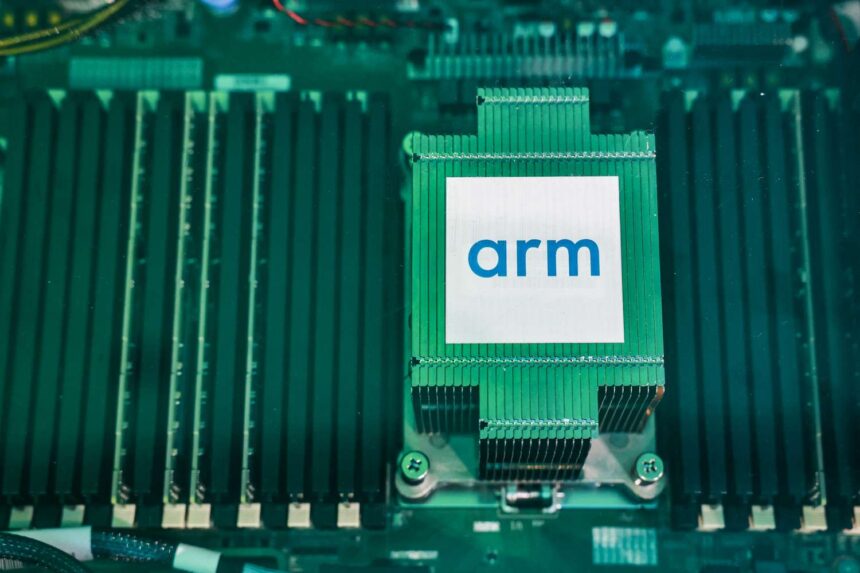
This week, Nvidia made headlines with its groundbreaking announcement of a $5 billion investment in Intel, leading to heightened concerns about increased competition for Arm and Advanced Micro Devices (AMD). Initially, the reaction from the market was swift and sharp, as investors anxiously assessed the potential implications of this strategic partnership. However, as the dust began to settle, analysts expressed a more tempered view on the long-term effects of the collaboration.
In the wake of the announcement, shares of Arm dipped by 7%, while AMD saw its stock price decrease by nearly 6% before recovering some losses. Despite the initial turbulence, several Wall Street analysts believe that the impact on both Arm and AMD may be less significant than expected. Bank of America analysts asserted that the partnership would likely have “limited near-term impact” on these companies, and they maintained “buy” ratings for both Arm and AMD. They also highlighted that companies involved in chipmaking equipment could experience growth if the collaboration bolsters Intel’s foundry business.
The analysts noted that a rise in stock prices for firms such as ASML, Applied Materials, and Lam Research post-announcement indicated positive sentiment toward the chipmaking equipment sector. Bernstein echoed this sentiment, suggesting that the ramifications for AMD might not be as severe as initially perceived. They emphasized that the deal could favor manufacturing equipment providers, hinting at an upswing in demand for their services.
A particularly notable point of discussion revolves around the implications of the Intel-Nvidia alliance for Intel’s foundry business, which manufactures chips for other companies. The details of the deal were minimal regarding foundry commitments, leading to uncertainty among investors about the potential influx of business for Intel’s manufacturing operations.
Bernstein analysts speculated that Nvidia’s partnership might reflect a preference for established manufacturing alliances, particularly with TSMC, which has been a crucial supplier. They noted that both Nvidia and Intel were eager to laud TSMC’s role, underscoring the importance of maintaining positive relations with their key supplier.
As industry observers look to the future, the sentiment suggests that while the collaboration may spur competition in the AI chip sector, it might not drastically alter the landscape for Arm and AMD. The prospect of Intel as a secondary source for chip manufacturing offers potential advantages, reflecting a broader strategy among companies to diversify their foundry options in an increasingly competitive market.