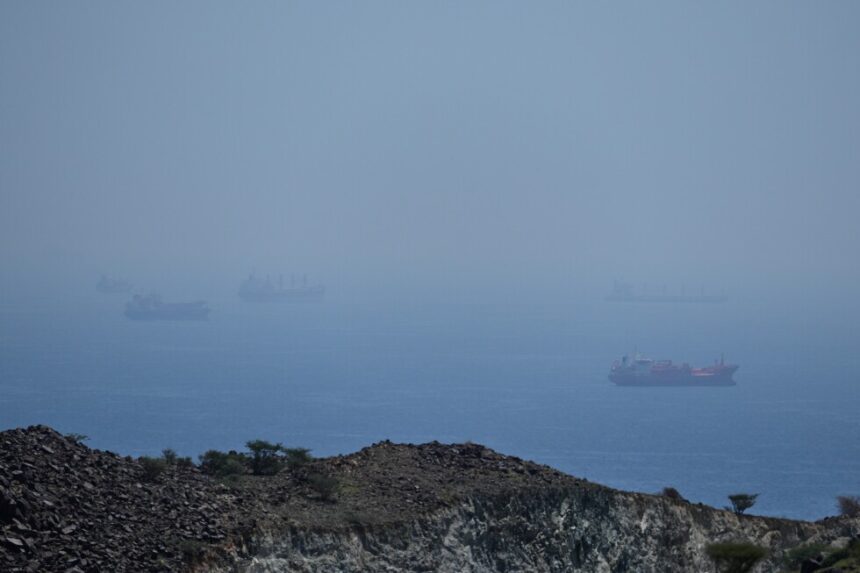
Oil prices surged in early trading on Sunday, driven by escalating tensions between Iran and the U.S. that have disrupted tanker traffic through the Strait of Hormuz—a vital passage for global energy supplies. U.S. crude oil rose by 6.4%, reaching $87.90 per barrel, shortly after trading resumed on the Chicago Mercantile Exchange. Meanwhile, Brent crude, which serves as the international benchmark, increased by 5.8% to $95.64 per barrel.
This market reaction came after an eventful weekend marked by fluctuating expectations surrounding the strait, which Iran effectively controls. On Friday, crude prices plunged over 9% when Iran announced plans to completely reopen the strait to commercial traffic. However, Tehran reversed that decision shortly thereafter, firing upon several vessels after U.S. President Donald Trump stated that a blockade of Iranian ports would remain in effect. In a dramatic escalation, Trump confirmed that the U.S. had attacked and seized an Iranian-flagged cargo ship allegedly trying to bypass the naval blockade. Iran’s military command has vowed retaliation against these actions.
The spike in oil prices on Sunday largely negated the previous drop, as doubts grew about the timeline for resuming oil transportation from this crucial region. The ongoing conflict, characterized as a U.S.-Israeli war against Iran, has entered its eighth week, contributing to one of the most severe global energy crises in decades. Countries in Asia and Europe, heavily reliant on oil imports from the Gulf, have experienced significant effects due to halted supplies and production cuts. This turmoil has also driven up prices for gasoline, diesel, and jet fuel, creating a ripple effect that impacts businesses and consumers globally.
Energy Secretary Chris Wright expressed his views on potential gas prices during a CNN interview. While he acknowledged that prices at the pump might not drop below $3 a gallon until next year, he suggested that they had likely peaked and were expected to decrease in the future.
Crude oil prices have seen extreme fluctuations since the initiation of military actions on February 28, following Iran’s retaliatory airstrikes on Gulf states. Prior to the conflict, crude was trading at approximately $70 per barrel, soaring to above $119 at times, and closing this past Friday at $82.59 for U.S. oil and $90.38 for Brent crude. Industry analysts have warned that the prolonged closure of the Strait of Hormuz could lead to even higher prices.
A fragile two-week ceasefire between the U.S. and Iran is set to expire this Wednesday, and growing tensions in the Strait complicate prospects for renewed negotiations to end the conflict. Even if a resolution to reopen the strait is achieved, experts caution that it could take months for oil shipments to stabilize and prices to decline. Factors such as backlogged tanker traffic, shipowners’ concerns about potential escalations, and damage to energy infrastructure will all impact the pace at which production and shipment volumes return to pre-war levels.
As of Sunday, the average price of a gallon of regular gas in the U.S. stood at nearly $4.05, according to the American Automobile Association (AAA). This figure represents an 8-cent decline from the previous week, but is still significantly higher than the $2.98 average prior to the outbreak of hostilities.