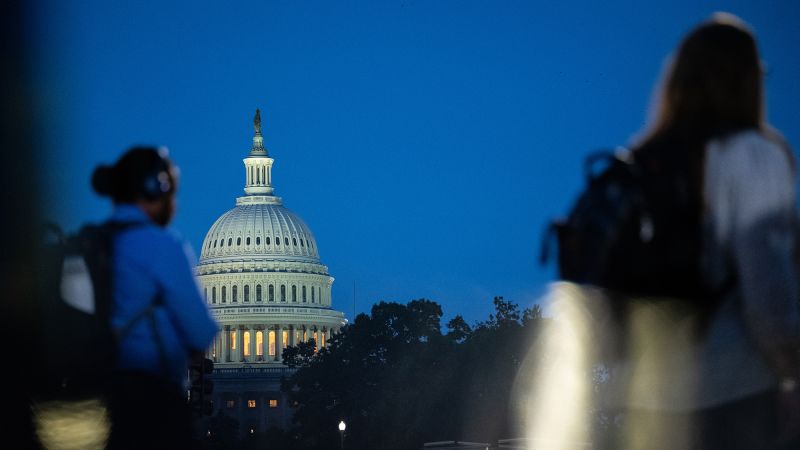
As the prospect of a government shutdown looms, the consequences could extend beyond the usual inconveniences for federal workers, travelers, and businesses tied to the U.S. government. While historical precedents suggest that government shutdowns often have minimal long-term impacts on the economy and stock market, the current situation may present unique and potentially severe challenges.
Historically, shutdowns are brief episodes, and the economic damage they inflict tends to be transient, rapidly reversed once the government resumes operations. For example, the 35-day shutdown from 2018 to 2019 left little lasting effect on the U.S. economy. Typically, sectors impacted, such as nonessential federal employees, face furloughs but are swiftly rehired post-shutdown, limiting the negative ramifications on overall economic growth.
In fact, the conventional wisdom posits that each week of government shutdown results in a reduction of approximately 0.2 percentage points from the gross domestic product (GDP). However, if history is any guide, these losses are usually quickly recuperated once federal activities resume.
This time, however, the potential for a protracted and more damaging shutdown is heightened by the Trump administration’s threats to implement mass layoffs of federal workers. Such measures could create not only immediate disruptions but also have long-lasting implications for the economy. Stephanie Roth, chief economist at Wolfe Research, characterized the possibility of hundreds of thousands of permanent layoffs as a significant economic risk that could reshape investor perceptions regarding the health of the U.S. economy.
The detrimental effects could extend beyond mere unemployment figures. Jared Bernstein, a senior economic adviser in the Biden administration, highlighted the unfairness of targeting federal employees who bear the brunt of political dysfunction. He emphasized that these individuals do not deserve hardship due to decisions made by political leadership.
Moreover, a government shutdown could disrupt the crucial flow of economic data. As collections and releases of vital statistics would likely be delayed, CEOs, investors, and Federal Reserve officials could find themselves making critical decisions without essential information. The Bureau of Labor Statistics, which provides pivotal job reports, may not release data during a shutdown, creating a significant informational void, particularly concerning an already fragile labor market. Nathan Sheets, global chief economist at Citigroup, noted that any interruption in data gathering could complicate analyses of ongoing labor market conditions and inflation metrics, which the Federal Reserve closely monitors.
Despite these looming concerns, Wall Street appears relatively unfazed. Stocks remain near record highs, with historical trends showing that markets typically shrug off government shutdowns. Since 1976, the S&P 500 has shown little variability during such episodes. In fact, past shutdowns have sometimes seen stocks rise, as was the case during the 2018 shutdown.
While some investment experts argue that shutdowns generally have a limited impact on the economy, they caution that the current situation diverges from historical patterns. Bob Elliott, chief investment officer at Unlimited Funds, remarked that analysts shouldn’t dismiss the uniqueness of this shutdown, urging caution amidst what he perceives as an unprecedented risk environment.
As economic vulnerabilities multiply, including signs of a faltering job market, the current fiscal standoff raises the stakes. With many already confronting chaos and uncertainty, the potential consequences of this shutdown loom larger than in previous years. David Kelly, chief global strategist at JPMorgan Asset Management, encapsulated the prevailing sentiment: “The timing is bad. It’s a little bit more dangerous this time.”