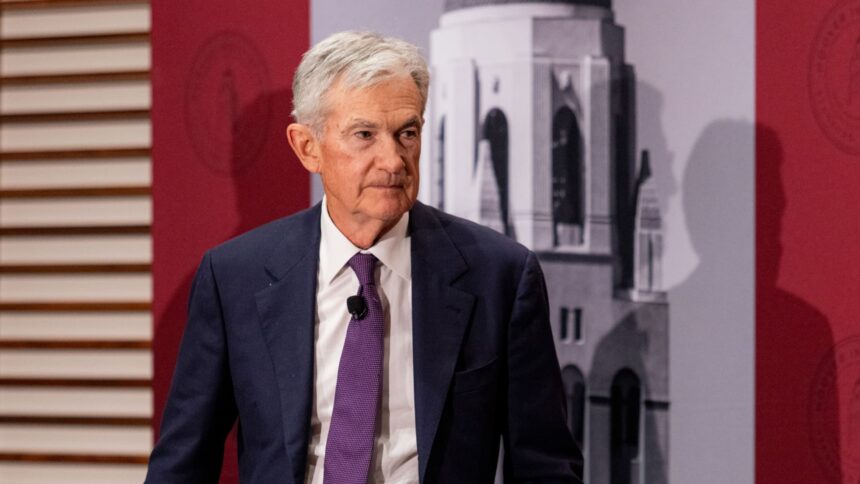
Federal Reserve Chairman Jerome Powell is set to attend oral arguments before the Supreme Court regarding a significant legal case that questions the extent of President Donald Trump’s authority to terminate Federal Reserve Governor Lisa Cook. This event is particularly noteworthy given that Powell’s presence at the Supreme Court is not typical for a sitting Fed chairman, especially under the current circumstances, where he is also under a criminal investigation related to a massive renovation project for the Fed’s headquarters.
The investigation, led by the U.S. Attorney’s Office in Washington, D.C., centers around the multi-billion-dollar renovation project and Powell’s subsequent testimony to Congress concerning the details of that initiative. Powell publicly disclosed his investigation during an uncommon statement made earlier this year, accusing the inquiry’s motivations as being a pretext rooted in the Fed’s unwillingness to conform to Trump’s demands for more rapid interest rate cuts.
The context of Powell’s attendance at the Supreme Court becomes increasingly significant as the legal battle unfolds. In August, Trump announced his intention to remove Cook from the Fed’s Board of Governors, alleging involvement in mortgage fraud related to her personal property holdings. Cook has adamantly denied these accusations and has not faced any criminal charges. In response to her dismissal, Cook initiated a lawsuit in federal court aiming to prevent her removal.
Following her legal challenges, a district court judge issued a ruling on September 9 that temporarily blocked Trump from firing Cook while the lawsuit proceeds. That preliminary ruling was subsequently upheld by a federal appeals court. In its filings with the Supreme Court, the Department of Justice referred to the lower court decisions as a misuse of judicial authority that improperly interfered with presidential powers regarding the removal of members from the Federal Reserve Board.
Such a case holds profound implications for the central bank’s autonomy and the dynamics of its relationship with the executive branch. The outcome may set a precedent concerning the limits of presidential authority over federal appointees, particularly in sensitive roles that are traditionally insulated from political pressure. As Powell prepares for this unprecedented legal confrontation, the financial and political ramifications are likely to be closely scrutinized by both the markets and lawmakers.