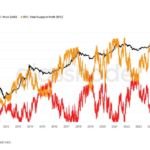
Americans find themselves in an unprecedented position concerning their investments, with a significant proportion of their household wealth now linked to the stock market. At the end of 2025, data from the Federal Reserve revealed that nearly one-third of all household assets—approximately $67.77 trillion—are tied directly and indirectly to equities. This marks a notable increase, surpassing the peaks observed during the meme-stock and SPAC frenzy of 2021 and even the heights of the dot-com boom in the early 2000s.
The striking surge, partially attributed to an AI-driven bull market, saw a staggering $10.31 trillion added to household portfolios in just one year, reflecting an 18% increase in equity holdings. Analysts from JPMorgan noted that this trend illustrates retail investors’ growing influence as a vital component of ongoing market growth.
However, these gains have not been evenly distributed. The wealthiest 10% of households own around 87% of all stock-market wealth, meaning that the benefits of this stock market surge have disproportionately favored affluent investors. As a result, while these wealthier households are enjoying increased financial flexibility due to their soaring portfolios, many lower- and middle-income Americans continue to face financial strains exacerbated by rising living costs and persistent inflation.
This economic divide has contributed to what some experts describe as a “K-shaped” economy, where the affluent get richer, while those at the lower end of the income spectrum struggle. Wealth concentration in stocks also raises significant concerns: should a market downturn occur, it could erase trillions in paper wealth, potentially harming consumer spending, retirement savings, and overall economic stability.
The discrepancy between Wall Street’s performance and Main Street realities has sparked discussions among economists. Despite low unemployment rates and continued GDP growth, many Americans express concern about their day-to-day expenditures, underscoring the disconnect in consumer sentiment.
Market analysts caution against the concentration of wealth in a small number of stocks, drawing parallels to historical periods where similar dynamics led to market corrections. For instance, the dominant “Magnificent Seven” stocks—comprising tech giants like Apple, Microsoft, Amazon, and others—account for a significant portion of the S&P 500, raising concerns about potential vulnerabilities.
Some market veterans insist that the real risk doesn’t lie in widespread over-investment among average Americans; rather, it results from the concentration of wealth growth tied to a limited group of investors and specific stocks. A market reversal could initially impact wealthy households but would have broader repercussions, affecting consumer confidence and overall economic momentum.
The ongoing situation highlights a stark contrast between soaring market valuations and the financial challenges faced by many Americans, emphasizing the need for a more balanced view of economic prosperity.