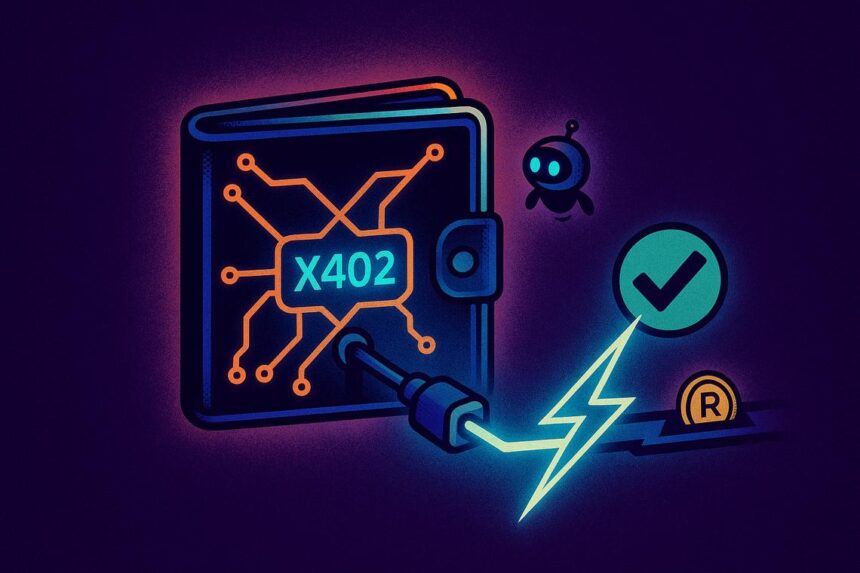
Ripple has made a strategic entry into the evolving field of autonomous transactions with the launch of the Ripple XRPL AI Starter Kit on June 11, 2026. This toolkit is designed to empower developers to create applications that enable AI agents to send and receive payments without the need for human intervention, marking a significant shift in payment paradigms.
At the heart of this initiative lies the XRP Ledger, which facilitates transactions in both XRP and the Ripple RLUSD stablecoin. The technical backbone of the toolkit is the X402 payment protocol, allowing for real-time, programmatic payment execution. This capability opens doors for AI agents to autonomously manage financial transactions, such as settling charges for cloud computing resources or purchasing digital content on demand, thereby eliminating delays and the need for manual authorization.
The XRPL AI Starter Kit aims to address a variety of use cases for AI-driven payments. For developers, the bundled resources—including wallets, payment integrations, and comprehensive technical documentation—help lower the entry barrier for creating what the industry terms agentic payment applications. Ripple emphasizes that it is not just about speed; trust, control, and clear payment rules are essential as AI agents take actions in financial transactions without human oversight.
One day prior to the launch, Ripple joined Mastercard’s newly introduced Agent Pay for Machines program, which focuses on facilitating high-volume, low-cost machine-to-machine payments. This initiative has attracted more than 30 participating companies from various fields, including notable names like Stripe, Coinbase, and Cloudflare. The breadth of participation underscores the recognition across the industry of the potential significance of agentic payments.
Ripple’s involvement in Mastercard’s framework positions it as a key player in shaping standards for machine-driven transactions. This collaboration allows Ripple to utilize its XRP Ledger technology and stablecoin to explore new use cases and define shared standards, solidifying its role as a foundational infrastructure provider in the agentic payments landscape.
The vision behind Mastercard’s program acknowledges the future of commerce as one increasingly filled with automated, continuous, low-value transactions. As AI agents become integral participants in the economy, the existing payment infrastructure will need to adapt to accommodate vast volumes of micro-transactions generated by software processes. Traditional payment systems, designed for human transactions, may struggle under this new demand, while blockchain networks offer scalability and efficiency suitable for such needs.
For developers, the Ripple XRPL AI Starter Kit alleviates the complexities and costs typically associated with building payment systems from the ground up. Its introduction indicates Ripple’s strategy of embedding XRP and RLUSD in the fabric of AI-driven commerce, anticipating a future where these technologies become essential components of digital transactions.
With the XRP Ledger already known for its high-speed and cost-effective settlement capabilities, this new shift towards agentic payments presents an opportunity to attract a new category of developers and enterprises—those not traditionally aligned with cryptocurrency but who could benefit from decentralized payment frameworks.
In summary, Ripple’s latest initiative could redefine digital payments by allowing AI agents to act autonomously in financial transactions, a development that merges technology with commerce in innovative ways. As this landscape evolves, Ripple’s early positioning in developing standards likely sets the stage for greater adoption and integration of blockchain technology in the future of automated payments.