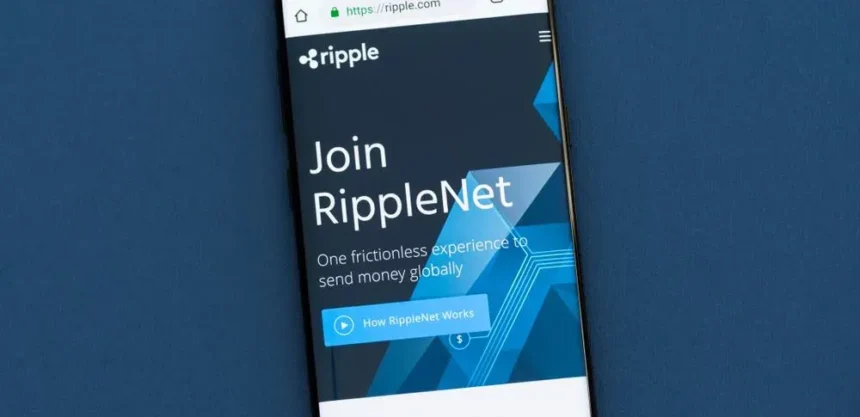
GTreasury, a firm linked to Ripple, has made a significant entry into SWIFT’s established ecosystem by securing a Certified Partner listing in the Business Solutions Directory for North America. This recognition is closely associated with SWIFT’s upcoming 2025 standards and compliance with ISO 20022, a protocol that enhances the ability to exchange richer, structured data among banks, corporations, and payment providers.
The importance of GTreasury’s certification lies in its role as an indication of a larger trend toward standardized and transparent financial communication. As ISO 20022 becomes the foundational framework for next-generation financial messaging, GTreasury’s adaptation reflects a forward-thinking approach, aligning with this global evolution.
This development holds particular significance following Ripple’s acquisition of GTreasury on October 16, 2025. With this acquisition, Ripple has integrated a SWIFT-certified and ISO 20022-compliant treasury platform, now known as Ripple Treasury, into its expanding institutional ecosystem. This ecosystem is already well-versed in cross-border payments, liquidity management, and digital asset infrastructure.
The juxtaposition of a Ripple-affiliated entity within SWIFT’s directory may initially seem contradictory; however, it symbolizes a broader convergence within global finance, rather than competition. SWIFT certification serves not merely as a partnership endorsement, but as a rigorous operational benchmark, confirming that platforms meet the stringent technical, security, and compliance requirements set by global banks and multinational corporations. Through this validation, GTreasury establishes itself firmly within the infrastructure layer relied upon by institutions as they modernize their payment systems.
Furthermore, this strategic move by Ripple indicates a deeper penetration into enterprise treasury systems that are integral to everyday corporate liquidity management, distancing itself from the speculative aspects of cryptocurrency markets. The key takeaway here is the growing emphasis on interoperability between traditional financial messaging networks and blockchain systems, suggesting an overlapping of functionalities rather than a clear divide.
As SWIFT refines its standards, networks like the XRP Ledger are simultaneously addressing faster settlement processes and more effective liquidity movements. This evolution hints at a model of convergence, where the integration of messaging services, treasury operations, and blockchain settlements is becoming a necessity for future financial operations.
Ripple’s strategy becomes clearer with the inclusion of GTreasury in its ecosystem, positioning itself at the intersection of conventional treasury management and blockchain settlement solutions. When combined with XRP and the XRP Ledger, Ripple aims to enhance rather than replace existing financial messaging systems, facilitating quicker settlements and improved liquidity coordination across various networks.
Ripple Treasury exemplifies this paradigm shift within Ripple’s broader operational framework. It offers a centralized solution for cash management, digital assets, and cross-border payments for CFOs and treasury teams, alleviating the fragmentation often found in traditional banking alongside emerging digital asset channels.
While some may perceive this movement as a departure from SWIFT, the reality is more nuanced. SWIFT remains a cornerstone of global banking infrastructure, while systems associated with Ripple increasingly align with the standards and workflows established by SWIFT. As the momentum towards convergence picks up pace, treasury platforms, messaging standards, and blockchain liquidity networks are starting to coexist within shared compliance and operational frameworks, with GTreasury’s inclusion in SWIFT’s certified directory underscoring this transition toward a hybrid model in institutional finance that operates alongside traditional systems instead of in direct competition.