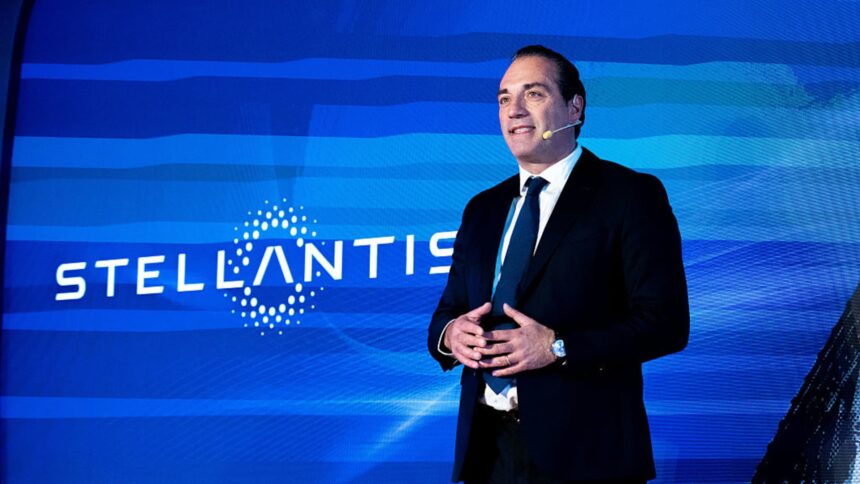
Stellantis has announced a substantial investment of 60 billion euros (approximately US$69.7 billion) as part of a new five-year strategic plan unveiled by CEO Antonio Filosa. This ambitious initiative aims to achieve annual cost savings of 6 billion euros by 2028, as the company seeks to navigate a rapidly evolving automotive landscape.
A significant portion of the investment, totaling 36 billion euros, will be allocated to the enhancement of Stellantis’ diverse automotive brand portfolio. The plan includes the launch of over 60 new vehicles and major refreshes of 50 existing models. This lineup will encompass a mix of all-electric vehicles, hybrids, and traditional internal combustion engine models. The remaining 24 billion euros will be directed towards the development of global vehicle platforms and advanced technologies.
Another critical aspect of the plan is Stellantis’s goal to achieve positive free cash flow by 2028, a turnaround from a substantial loss of 22.3 billion euros last year, largely attributed to a restructuring effort that scaled back all-electric vehicle initiatives. In pre-market trading, Stellantis shares experienced a decline of 4% on the New York Stock Exchange, reflecting market reactions to the new plan.
Importantly, the strategy will not involve the elimination of any of Stellantis’ 14 automotive brands. However, the operations of its DS and Lancia units in Europe will be integrated into Citroen and Fiat, respectively. Notably, Fiat stands out as one of four “global brands” in Stellantis’ portfolio, alongside Jeep, Ram Trucks, and Peugeot, and encompasses its Pro One commercial operations. Other regional brands include Chrysler, Dodge, Citroen, Opel, and Alfa Romeo, with the luxury brand Maserati also under its umbrella.
To bolster cost efficiency, Stellantis plans to introduce a new vehicle platform dubbed “STLA One” in 2027. This innovative platform aims to consolidate five existing platforms into a single scalable architecture, which is expected to reduce complexity and enhance efficiency, targeting a 20% cost reduction. By 2030, Stellantis envisions that 50% of its production volume will be generated on just three global platforms, with component reuse reaching up to 70%.
During the presentation of the “FaSTLAne 2030” plan at the company’s North American headquarters near Detroit, Filosa expressed confidence in Stellantis’s position for future success. He emphasized the importance of leveraging the company’s assets, regional roots, and technological advancements. Stellantis Chairman John Elkann described the plan as “ambitious, but realistic,” acknowledging the challenges and opportunities the company faces in the industry.
Adding to the momentum, Stellantis has recently established new partnerships, including tie-ups with Jaguar Land Rover for the U.S. market and collaborations with Chinese automakers Leapmotor and Dongfeng Group, primarily focused on Europe and China. While collaborating with these companies, Stellantis is also mindful of increasing competition within those markets.
In response to the intensifying competition in Europe, Stellantis has projected a reduction in production capacity by over 800,000 units. The company plans to repurpose manufacturing plants and enhance partnerships, aiming to preserve jobs in its manufacturing sector while targeting an 80% utilization rate across its plants in both Europe and the U.S. by 2030.