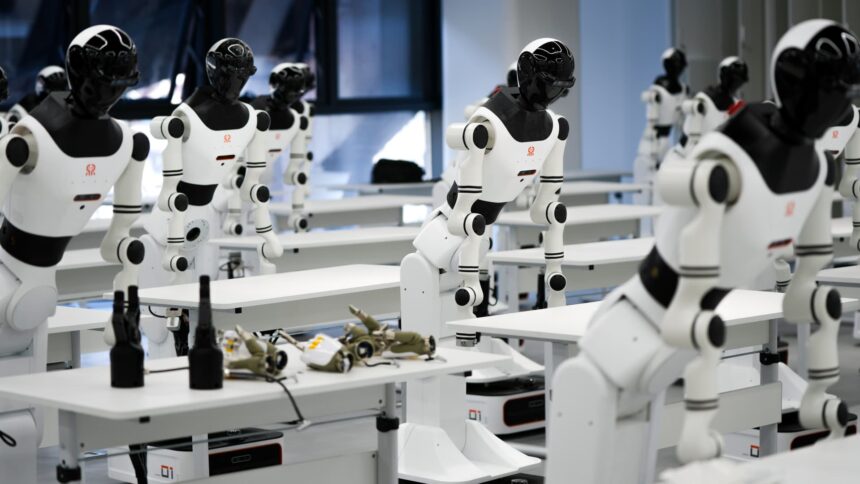
At the humanoid robot data training center in Shougang Park, Beijing, humanoid industrial robots were prominently showcased, highlighting advancements in robotics technology. Among those making waves in the sector is RJ Scaringe, CEO of Rivian Automotive, who shared his ambitious vision for the future of electric vehicle (EV) manufacturing. During a recent launch event for the Rivian R2 EV in Park City, Utah, Scaringe emphasized the collaborative potential between human workers and humanoid robots, predicting a future where manufacturing employees will work side-by-side with robotic colleagues.
Scaringe, a tech entrepreneur with a passion for robotics, established a separate entity named Mind Robotics last year. The company, which has already secured over $1 billion in funding, emphasizes the development of humanoid robots that mimic human shape and movements. These robots are empowered by complex artificial intelligence algorithms and cutting-edge hardware.
The Rivian CEO revealed plans for Mind Robotics to unveil its first product within a year, with Rivian poised to play a significant role as both a financial backer and initial customer. Current job openings at Mind Robotics include positions for software engineers, hardware engineers, and data architects, reflecting the growing demand in the robotics field.
Interestingly, Scaringe intends to maintain autonomy for Mind Robotics, diverging from Tesla’s approach under Elon Musk, who has integrated robotics into his automotive enterprise. This distinction has led to Scaringe being dubbed the “anti-Elon.” Despite the contrasts, both companies share a commitment to autonomy, although Scaringe insists their product offerings are fundamentally different.
The partnership between Rivian and Mind is mutually beneficial, as Rivian will be providing data for training the AI models used in the robots. Scaringe remarked on the vast opportunities within the industrial labor market — estimating a potential worth of multitrillions of dollars — and the pressing labor shortages faced by manufacturers like Rivian.
In his discussions, Scaringe expressed palpable enthusiasm for the surge in AI and robotics technologies, describing the present era as potentially one of the most significant in human history. He believes future generations will thrive on the contributions of AI, considering the current age to be a pivotal moment in the development of intelligent systems.
While optimistic about the expanding role of humanoid robots, Scaringe underscored that these devices are intended to enhance rather than fully replace human workers. He anticipates that basic tasks will increasingly be automated, while more intricate tasks requiring human creativity and dexterity will remain in human hands for the foreseeable future.
Addressing the labor shortages in the manufacturing sector, Scaringe remarked on the pressing need for more skilled workers. Rivian’s ongoing recruitment for over 30 manufacturing and engineering positions underscores this demand. He highlighted the rapid pace of AI advancements, suggesting that employees might soon be collaborating with robots much more than society currently realizes.
The enthusiasm surrounding humanoid robots and their integration into the workforce exemplifies the shifting landscape of manufacturing, paving the way for a future where humans and robots work in tandem to navigate the complexities of production.