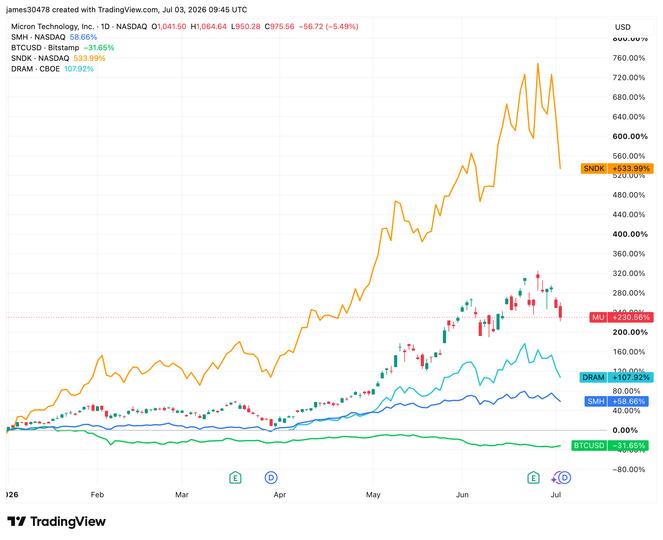
In recent days, market dynamics have shifted, indicating a potential reassessment among investors. The Roundhill Memory ETF has experienced a significant decline of approximately 25% since hitting a record high on June 22, while the VanEck Semiconductor ETF has also seen a downturn, dropping by 12%. In contrast, Bitcoin has staged a comeback, recovering from its dip below $58,000 on July 1 to trade above $61,000 once more.
The selling pressure related to AI stocks intensified on Wednesday following a Bloomberg report that Meta Platforms is establishing a new business unit named Meta Compute. This division will focus on selling excess GPU (graphic processing unit) computing capacity to third-party companies. The announcement has sent shockwaves through the sector, particularly impacting firms that have thrived during the AI compute boom, notably “neocloud” providers that lease GPU infrastructure to AI developers.
This includes former Bitcoin miners that have transitioned their resources towards high-performance computing (HPC) and GPU hosting services. Notable companies in this category, such as IREN (IREN), Cipher Digital (CIFR), and TerraWulf (WULF), each recorded declines of at least 20% from their peak values.
While it remains premature to label the current movement as a sustained rotation, investors may be signaling a shift in risk appetite. After a period characterized by an inflow of capital into AI infrastructure at the expense of cryptocurrencies, the recent downturn in semiconductor leaders, coupled with Bitcoin’s resurgence, could hint at a rebalancing of investment strategies towards digital assets. This evolving landscape underscores the ongoing fluctuations in investor sentiment as the market navigates its next steps.