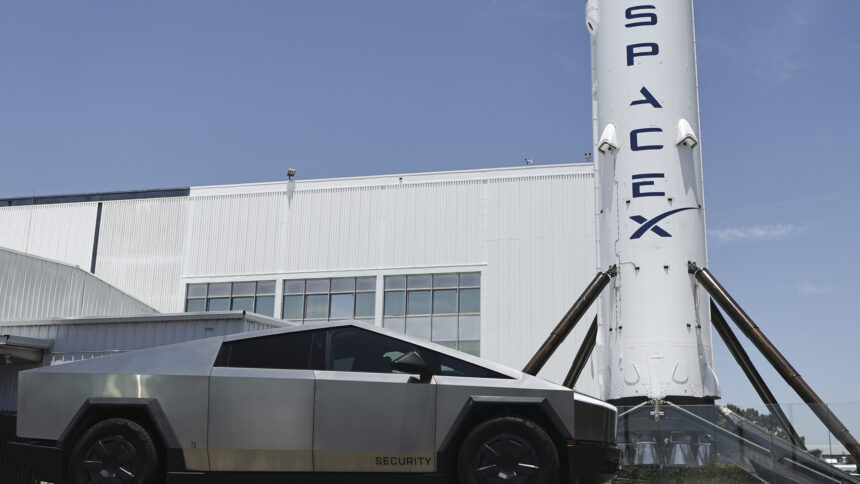
In a recent announcement, S&P Dow Jones Indices confirmed that there would be no alterations to the eligibility criteria for companies seeking to enter the S&P 500 index. The decision signifies that despite their potential and the significant expectations surrounding them, companies like SpaceX, Anthropic, and OpenAI may face challenges in meeting the stringent profitability requirements necessary for inclusion.
The implications of swift entry into the S&P 500 could have been substantial. Bloomberg Intelligence estimated that SpaceX could have witnessed an influx of $14 billion from passive fund investments if it had secured a spot in the index. OpenAI and Anthropic would have benefited similarly, with potential gains of over $8 billion and $4.6 billion, respectively. This massive investment spike underscores the importance of the S&P 500 in the financial landscape, where approximately $7.5 trillion in passively managed assets track the index. Major asset management firms like Vanguard and Fidelity leverage this strategy to provide clients with exposure to companies listed in the S&P 500.
Nevertheless, the S&P Dow Jones Indices did implement one minor adjustment, allowing changes to the investable weight factor rules for less prominent benchmarks, such as the S&P Total Market Index. This adjustment may facilitate faster inclusion for companies going public. In contrast, the Nasdaq stock exchange has adopted rules that would enable SpaceX to be listed on the Nasdaq-100 Index within just 15 trading days after an IPO—considerably shorter than the previous duration of three months. Additionally, the FTSE Russell index has also streamlined its process, permitting accelerated entry for companies like SpaceX to the Russell Top 500 Index shortly after their IPO.
This decision by S&P comes on the heels of assessments from Morningstar analysts, who recently characterized SpaceX as “significantly overvalued” leading up to its IPO. Morningstar valued the company at $780 billion—far below the $1.75 trillion goal initially set by SpaceX. This valuation was primarily based on the company’s performance in the satellite communication domain with its Starlink service and its operations in the rocket launch sector.
The contrasting responses from various indices highlight the competitive landscape for tech companies seeking to establish their presence and attract substantial investments in the ever-evolving market. As these companies navigate their paths forward, the pressure to demonstrate consistent profitability will remain a critical factor in their quest for entry into prestigious stock indices.