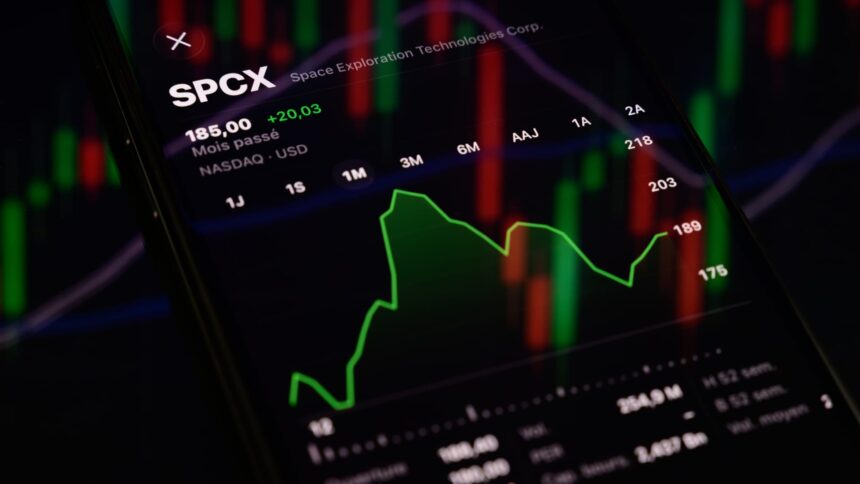
The stock performance of SpaceX has taken a notable downturn, continuing its consolidation phase on the New York Stock Exchange just a week after its debut on the Nasdaq. Recent market volatility has left investors questioning whether these declines signal the onset of a serious correction or present an opportunity for savvy buying.
Wall Street has begun to reflect a pessimistic outlook on technology stocks as it returned from a long weekend. The Nasdaq Composite experienced the most significant drop among the indices, falling 1.32% to close at 26,166.60. This downturn was marked by a shift in investor sentiment, particularly regarding the so-called “Magnificent Seven” tech giants. Companies such as Amazon and Meta Platforms saw declines of nearly 5% and 2%, respectively, while shares of Alphabet plummeted 5%—its worst performance in over a year—amidst concerns about talent loss following the exit of two prominent AI researchers to rival firms.
SpaceX emerged as the day’s most significant loser, with its stock plummeting 16%, marking the third consecutive day of losses. Investors who purchased shares following SpaceX’s initial public offering have watched their gains nearly evaporate by the end of last week due to this downward momentum.
Across the globe, Asia-Pacific markets mirrored the wave of negativity, responding to the trends set in U.S. trading. South Korea’s Kospi dropped over 8%, activating circuit breakers, while Japan’s Nikkei also experienced declines.
In a separate geopolitical context, the U.S. Treasury announced a 60-day license that allows the production, delivery, and sale of oil from Iran. When questioned about the potential implications, particularly regarding whether Iran could use oil revenue to bolster its military, President Trump responded ambiguously, saying, “Well, they’re not supposed to be doing that, so we’ll see.”
In the United Kingdom, today marks a significant milestone—the 10-year anniversary of the Brexit referendum held on June 23, 2016. This date coincides with fresh political turmoil as Prime Minister Keir Starmer’s recent resignation allows rival frontrunner Andy Burnham to advance his leadership aspirations.
In other news, Indian fintech firm Cred is set to raise $900 million in a funding round led by Meta, although this comes at the cost of losing its founder and CEO, Kunal Shah, who has transitioned to WhatsApp. Valued at over $4 billion following this funding round, Cred plans to utilize the funds to enhance its growth, strengthen its organizational capacity, and fortify its leadership across various market categories.