Stock futures experienced a significant decline on Sunday, accompanied by soaring oil prices, as hopes for a complete reopening of the Strait of Hormuz were dashed amidst renewed gunfire. The Dow Jones industrial average futures fell by 407 points, equivalent to a 0.82% decrease, while S&P 500 futures decreased by 0.67% and Nasdaq futures lost 0.57%.
The repercussions in the oil market were stark; U.S. oil futures surged by 7.14%, reaching $89.94 a barrel, and Brent crude climbed by 5.9% to hit $95.71. In contrast, gold prices fell by 1.6%, settling at $4,801.40 per ounce.
The U.S. dollar showcased slight strength, rising 0.2% against the euro and increasing by 0.25% against the yen. Meanwhile, the yield on the 10-year Treasury held steady at 4.248%.
This unsettling turn of events follows an announcement made on Friday by President Donald Trump and Iran’s foreign minister, declaring that ship traffic through the strategically vital Strait of Hormuz was entirely free, which had initially led to a drop in oil prices and sparked a significant stock market rally, pushing the S&P 500 to new heights. However, Trump clarified that the U.S. naval blockade on Iran would remain in place until a comprehensive deal was reached. This statement was met with resistance from the Islamic Revolutionary Guard Corps (IRGC), which continued to assert its control over the strait.
By Saturday, tensions escalated as the IRGC announced the closure of the Hormuz Strait to all vessels, regardless of their type or national origin. Reports surfaced of ships coming under attack from projectiles and small vessels, often referred to as Iran’s “mosquito fleet.”
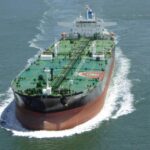
The situation intensified on Sunday when the U.S. Navy conducted its first seizure of a vessel under the naval blockade. The guided-missile destroyer USS Spruance intercepted the Iranian-flagged ship M/V Touska while it was navigating the north Arabian Sea, heading toward Bandar Abbas on the Iranian coast. After issuing multiple warnings of violation, the USS Spruance engaged in a six-hour standoff before firing warning shots and ultimately disabling the ship’s propulsion system.
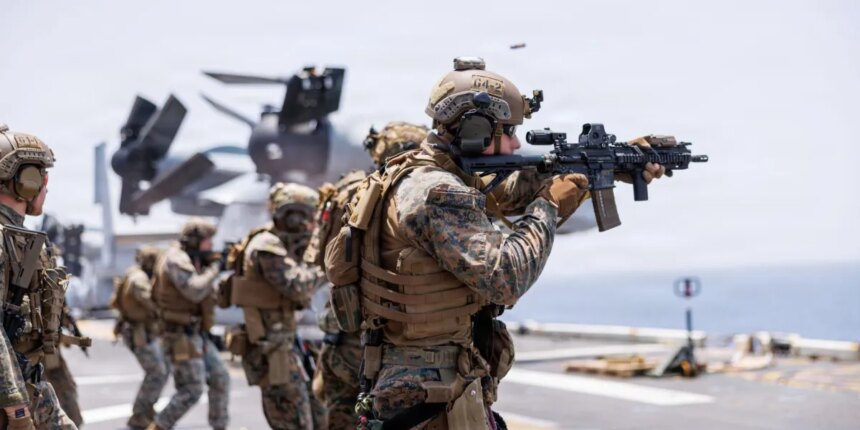
In a released video, sailors on the USS Spruance were heard instructing the crew of the Touska to vacate the engine room, suggesting that they were prepared to take disabling action. Following the strike, Marines from the 31st Marine Expeditionary Unit boarded the Touska, which is now under U.S. custody. This operation came amid reported maritime raid training exercises conducted by Marines and Navy mine-clearing operations employing drones.
Despite the rising tensions, President Trump indicated a willingness to pursue diplomatic channels, dispatching envoys to Pakistan to reinvigorate discussions with Iran. However, as of Sunday evening, there had been no confirmation from Tehran on the attendance of its diplomats.
On a concerning note, state media affiliated with the IRGC issued warnings that Iran is bracing for the potential resumption of armed conflict. They outlined critical targets in strategic locations such as the Red Sea, Saudi Arabia, and the UAE. An article from Tasnim News hinted at Iran’s readiness to unleash significant retaliatory measures in the event of renewed hostilities, emphasizing their preparedness to counter attacks on vital infrastructure without restraint.
Overall, the situation remains tense, highlighting the fragility of regional security and the complex interplay between military actions and diplomatic efforts.