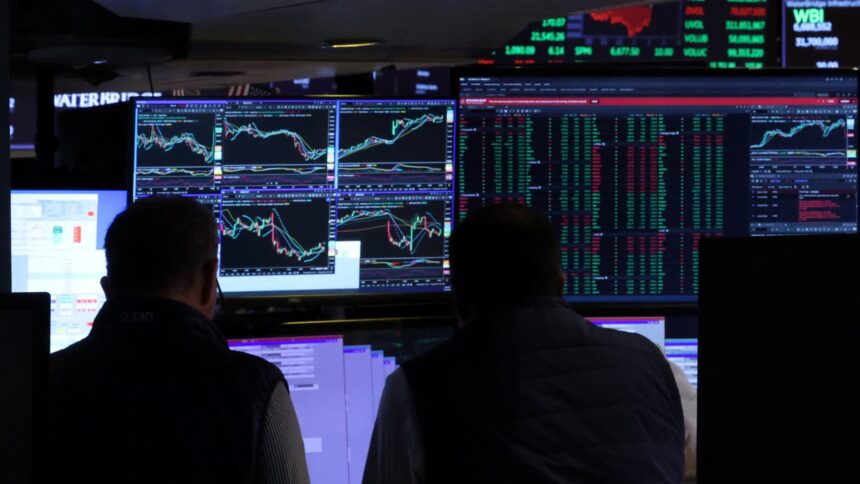
Traders were observed busy on the floor of the New York Stock Exchange as the new month of trading commenced. Stock futures remained relatively stable on Sunday night, with S&P 500 futures inching up by 0.1% alongside similar gains in Nasdaq-100 futures. There was a slight increase of 16 points in Dow Jones Industrial Average futures, representing less than a 0.1% rise.
Wall Street recently concluded a positive trading session, further bolstering the benchmark’s gains for October. The S&P 500 recorded an increase of 2.3%, and the Dow industrials climbed by 2.5%. Notably, the Nasdaq Composite outperformed both, achieving a robust gain of 4.7%. These advancements were attributed to a sustained interest in the artificial intelligence market and indications of easing trade tensions between the U.S. and China.
To date, more than 300 companies within the S&P 500 have reported their third-quarter results, with over 80% surpassing analyst expectations, as highlighted by data from FactSet. This week is expected to see another wave of reports, with over 100 companies set to release their earnings, including notable AI-related firms such as Palantir and AMD.
Tom Lee, the head of research at Fundstrat, expressed confidence in the ongoing strength of the U.S. earnings landscape, attributing it to three main factors: strong visibility in AI spending, innovation within financials supported by blockchain technology, and a dovish stance from the Federal Reserve, including anticipated lower interest rates as quantitative tightening is set to conclude on December 1.
Looking ahead, there may be a seasonal boost for Wall Street this month. Historical data from the Stock Trader’s Almanac shows that the S&P 500 has averaged a gain of 1.8% in November, positioning it as the strongest month for the benchmark.
Meanwhile, investors remain attentive to developments in Washington, as the ongoing government shutdown continues to affect the release of crucial economic data, including the monthly jobs report. Additionally, the Supreme Court is expected to hear oral arguments concerning the legality of tariffs imposed by the Trump administration, which could have further implications for the markets.