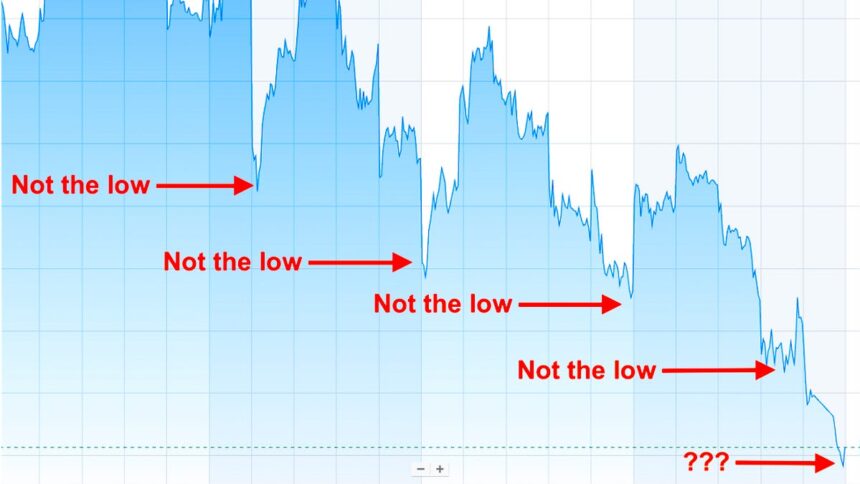
The stock market experienced a notable downturn last week, with the S&P 500 dropping by 1.9%, closing at 6,506.48. This marks a 6.8% decline since its closing peak of 6,978.60 on January 27, as well as a 5% decrease year-to-date. Analysts and investors are increasingly concerned about the unpredictability of market dynamics, especially in light of escalating geopolitical tensions, particularly related to the ongoing conflict in Iran.
Federal Reserve Chair Jerome Powell addressed the uncertainty surrounding the effects of rising energy prices stemming from the turmoil. He emphasized, “The thing I really want to emphasize is that nobody knows,” referring to the potential economic repercussions, which could vary significantly in magnitude. This sentiment mirrors the broader confusion currently pervading market analysis, as many experts struggle to predict future trends amid volatile conditions.
A recent survey by Bank of America (BofA) revealed that only 14% of financial professionals considered geopolitical conflict a primary risk in February; this figure surged to 37% by March, underscoring a growing awareness of external threats to market stability. Analysts from TKer noted that major risks often arise unexpectedly and are not reflected in stock valuations, leading to swift and sometimes irrational market reactions when these risks materialize.
The unraveling of the conflict in Iran poses particular challenges, directly impacting global oil supply and pricing. As the conflict develops, it stirs uncertainty that frustrates forecasting, compounding the dilemma for investors attempting to evaluate financial models. A rapid resolution could lead to lower-than-expected costs, while extended conflict could elevate costs further. Powell’s remarks capture this uncertainty: “They could be much smaller or much bigger. We just don’t know.”
This ambiguity feeds into the erratic responses of the stock market to news cycles. Daily fluctuations highlight the market’s reaction to contradictory headlines about the conflict’s trajectory, illustrating a consistent pattern of whipsawing as traders react to both optimistic and pessimistic developments.
Early signs of economic trouble are apparent, and BofA’s survey has raised alarm over geopolitical tensions overtaking previously held concerns about an “AI bubble.” Commentary from UBS economist Paul Donovan noted, “Markets are reacting to political comments about the length of the Gulf war,” reflecting the profound connection between investor sentiment and geopolitical narratives.
In terms of recent macroeconomic indicators, the Federal Reserve has maintained its benchmark interest rate within the 3.5% to 3.75% band, projecting solid economic activity despite persistent inflationary pressures. Powell acknowledged twin risks associated with the Fed’s dual mandate, stressing vigilance amid geopolitical uncertainties.
Employment metrics present a mixed picture; initial unemployment claims fell to 205,000, suggesting stability within the labor market. However, a report from payroll processor ADP indicated that private sector job growth has been disappointing, as merely 9,000 jobs were added in the last four weeks.
On the consumer front, spending remains robust — with data from JPMorgan showing spending trends significantly up from last year. However, BofA highlighted higher gas spending due to rising prices, which may constrain further discretionary spending. Industrial production saw a modest uptick, while business investment in nondefense capital goods continues to rise, hinting at sustained economic activity despite cooling growth.
The housing market presents a complex narrative with rising mortgage rates; the average 30-year fixed-rate mortgage edged up to 6.22%. Nevertheless, positive trends in homebuyer enthusiasm and sentiment were noted, driven in part by improving affordability.
Despite the challenges, some economists assert that long-term fundamentals remain solid. Concerns about rising tensions and market volatility should not overshadow the potential for future growth, highlighting the enduring view that the challenges the market faces today will eventually be overcome.
Investors are encouraged to adopt a long-term perspective, recognizing that the cycle of market ups and downs is a natural part of investment in equities. While caution is warranted given the present volatility and uncertainty, history suggests that waiting for economic conditions to stabilize could yield fruitful results for patient investors.