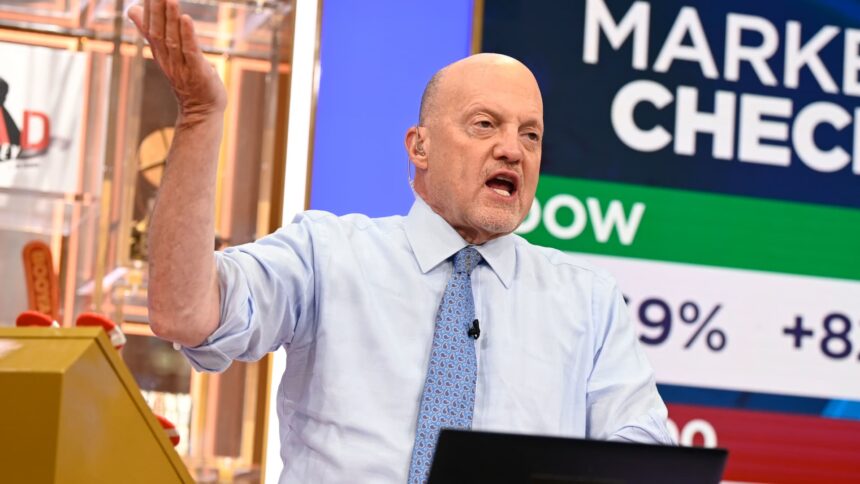
In a revealing analysis on Tuesday, CNBC’s Jim Cramer expressed concerns that the stock market may find it challenging to maintain its recent upward momentum unless there is a shift in the bond market. Cramer emphasized that a significant factor for any sustainable rally in stocks is the presence of lower interest rates, which he referred to as the “oxygen” necessary for market growth.
The consumer price index (CPI) data released on the same day indicated a sharper-than-anticipated rise in prices, with a seasonally adjusted increase of 0.6% in April. This increase propelled the annual inflation rate to 3.8%, a development that prompted a rise in Treasury yields. Notably, the 2-year yield momentarily reached 4%, causing investors to reassess their expectations regarding future interest rate cuts from the Federal Reserve.
Cramer’s commentary highlighted the intricacies of inflation managing, pointing out that persistent inflation complicates the Fed’s ability to lower rates. Typically, policymakers aim to maintain higher borrowing costs to curtail rapid price increases, making the prospect of reduction less likely in the current climate.
While he noted a recent rotation into undervalued sectors such as healthcare, Cramer remained skeptical about the sustainability of this trend in the absence of easing rates. He cautioned that without support from the bond market, any gains in the stock market could be fleeting, merely reflecting short-term trading rather than a robust recovery.
The host further connected rising inflation pressures to global factors, particularly the ongoing conflict in Iran, which he argued is exerting significant upward pressure on commodity prices, including oil. Cramer stated that these rising oil prices are affecting various sectors, driving up costs for essentials like housing, services, food, apparel, and gas. He remarked, “The war’s doing something even the tariffs couldn’t do: raising prices across the board for the average American,” indicating a broader economic impact beyond immediate market reactions.
Cramer also cited Home Depot as a case in point, revealing how the effects of increased borrowing costs are being felt in stocks reliant on cheaper financing. He disclosed that he had made a purchase of Home Depot shares for the CNBC Investing Club’s Charitable Trust, driven by a belief that eventual interest rate cuts would bolster demand in the housing sector. However, he noted that the stock has fallen to its lowest levels since November 2023, acknowledging that his strategy has not panned out as anticipated.
Ultimately, Cramer concluded that the hotter inflation figures have constricted investors’ options and pose a significant obstacle for the stock market to thrive without a decrease in borrowing costs. He remarked, “When you get this kind of inflation, it really cuts back on your opportunities,” underscoring the challenges ahead for investors navigating this complicated economic landscape.