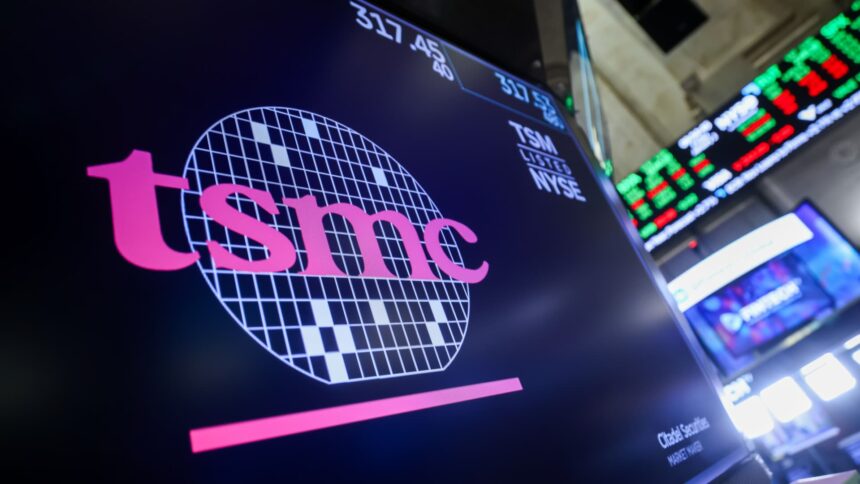
Taiwan Semiconductor Manufacturing Co. (TSMC) has emerged as a central player on the New York Stock Exchange, signaling the growing prominence of semiconductor stocks amid the rising tide of artificial intelligence (AI). As Taiwan’s Taiex and South Korea’s Kospi indexes surged to new record highs, experts raised concerns regarding the potential risks of market concentration driven by a small number of AI-related companies.
The Kospi index has recorded an impressive increase of over 80% this year, while the Taiex has consistently hit new peaks as investors flock to the semiconductor sector, which plays a pivotal role in the ongoing AI revolution. Goldman Sachs strategist Tim Moe pointed out that Taiwan stands over 80% exposed to AI revenue streams, whereas South Korea’s exposure is around 60%. The extraordinary demand for memory chips and advanced semiconductors has led to unparalleled growth in earnings within these markets.
The concentration is particularly significant; TSMC boasts a market capitalization of approximately 58 trillion Taiwan dollars ($1.85 trillion) and represents over 40% of Taiwan’s Taiex index. Similarly, in South Korea, Samsung Electronics and SK Hynix accounted for a record 42.2% of the Kospi in May, with Samsung’s market cap recently surpassing $1 trillion amid strong investor interest in AI-linked stocks.
While the stock market gains may appear robust, analysts caution that these indices may not fully reflect the overall health of domestic economies. The heavy reliance on a narrow group of exporters could heighten volatility and leave the markets vulnerable to various shocks, such as geopolitical tensions or unexpected downturns in data center spending.
Moe emphasized the risks associated with market concentration, which could expose both markets to supply chain disruptions and other vulnerabilities that might stem from political backlash against AI infrastructure or technological advances that alter chip designs. Taiwan and South Korea, situated at the epicenter of a manufacturing ecosystem reliant on specialized resources, could face significant risks if critical materials become inaccessible due to geopolitical conflicts or global shipping disruptions.
Energy prices also pose a challenge, particularly for Taiwan and South Korea, as both countries are major energy importers. The rising costs stemming from tensions in the Middle East could weaken their purchasing power and competitiveness, despite boosted export activities driven by AI demand. Investment director Jamie Mills O’Brien noted that the two markets are disadvantaged by their status as large energy importers during periods of escalating oil prices.
Another significant concern is the high expectations encapsulated in current valuations. The AI frenzy has propelled tech earnings sharply upward, with Goldman estimating South Korea’s earnings growth could skyrocket by 300% this year. However, this raises the question of how accurately these trends reflect true economic growth in the region. Mixo Das of JPMorgan pointed out that both markets often mirror global demand due to the predominance of exporters, but the current concentration on AI has intensified this dynamic.
While similarities exist between Taiwan and South Korea’s equity benchmarks, significant divergences in how they relate to their respective economies are becoming apparent. South Korea’s market, despite the dominance of chipmakers, encompasses a broader spectrum of industries including shipbuilding and defense, which lends it greater resilience. In contrast, Taiwan’s market dependency on TSMC has increasingly distanced it from broader domestic economic performance.
Investors are increasingly wary of becoming too reliant on a single lucrative theme, with reports suggesting that as much as 40% to 45% of the S&P 500 is AI-related. Qi Wang from UOB underscored that Taiwan’s growing dependence on TSMC may lead to long-term distortions in both the economy and the stock market. The recent relaxation of limits on domestic funds’ stock allocations is expected to direct billions into TSMC, potentially heightening the concentration risk.
Some strategists argue that comparisons with other concentrated markets overlook the complex and interconnected fabric of the semiconductor ecosystem. Nonetheless, historical precedents offer caution; countries like Denmark and Saudi Arabia have struggled when overly reliant on singular corporate champions with specific commodity ties.
As the AI-driven market continues to expand, the lessons from previous downturns suggest that concentration can exacerbate risks once the market sentiment shifts. Many global investors might inadvertently amplify their exposure to the AI sector by investing in both U.S. technology giants and Asian markets dominated by semiconductor leaders. If a correction occurs, it could lead to substantial challenges for these investors as they grapple with layered risks.