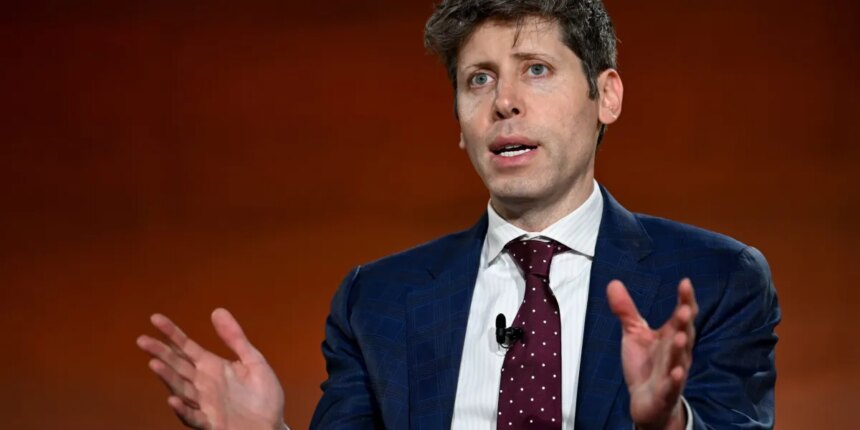
In a notable shift in perspective among tech leaders, two prominent CEOs, Sam Altman of OpenAI and Dario Amodei of Anthropic, have recently acknowledged that their previous predictions about artificial intelligence (AI) and its impact on white-collar employment were misguided. This admission aligns them with Goldman Sachs CEO David Solomon, who has also expressed skepticism about the notion of an impending job apocalypse driven by AI advancements.
In a recent conversation with Commonwealth Bank of Australia CEO Matt Comyn, Altman conceded, “I was pretty wrong” regarding the anticipated economic effects of AI. Just a year prior, he cautioned that entry-level positions could be significantly endangered by AI. Now, he indicates that initial fears of widespread job elimination have not materialized. Reflecting on his earlier warnings, Altman noted the criticism he faced for fostering anxiety about AI’s implications but justified his caution by stating, “Better safe than sorry.” He acknowledged the ongoing potential risks while recognizing a shift in the job market landscape.
Altman has also shared personal experiences that helped reshape his views. After attempting to delegate his own communications to AI, he returned to engaging personally, realizing, “We really do care about our interactions with people.” This revelation led him to reconsider the relationship between automation and employment.
Amodei’s transformation has been equally pronounced. Initially predicting that AI could displace up to 50% of white-collar jobs, he has now positioned automation as a means of enhancing human productivity. He suggested that even if AI performs 90% of a job, the remaining 10% could expand significantly in scope, ultimately boosting overall productivity. This vision aligns with commentary from economists who believe that automation tends to create new opportunities rather than simply eliminate existing roles.
In contrast to Altman and Amodei’s adjustments, Solomon has consistently maintained that fears surrounding job losses due to AI are overstated. He recently reinforced his stance in a New York Times op-ed, citing a long history of American job creation in the face of technological disruptions. Solomon referenced data indicating that civilian U.S. employment has surged by 145% since 1962, even as industries have evolved due to technological advancements. He pointed to the emergence of jobs in data centers as evidence of AI-related growth rather than decline.
However, the current employment landscape reflects a complex reality. Layoffs in the tech sector have reached over 115,000 so far this year, drawing attention to the potential effects of AI on job security. Major companies like Meta, Amazon, and Snap have cited AI as a factor in their workforce reductions. Yet, research from the Yale Budget Lab reveals no substantial shifts in job categories or unemployment durations in heavily AI-exposed industries since the launch of ChatGPT in late 2022.
The discourse surrounding AI and its influence on work continues to evolve. Industry leaders have voiced varied expectations—some assert that automation could soon overtake a majority of white-collar tasks, while others argue that it will unlock new opportunities rather than diminish the workforce. Box CEO Aaron Levie expressed optimism regarding Solomon’s arguments, suggesting that historical trends demonstrate that advancements in efficiency have not negated the need for jobs, but rather transformed them in ways that enhance demand.
The phenomenon, known as Jevons Paradox, elucidates this dynamic, illustrating how advancements in efficiency do not necessarily lead to reduced demand. Instead, as tasks become cheaper and easier to accomplish using technology, demand can increase, creating new markets and opportunities.
As business leaders and economists continue to analyze the impact of AI on the labor market, it remains clear that the conversation is far from settled. The evolving insights from these influential CEOs reflect a broader trend of reassessment, opening the door to a more nuanced understanding of how AI can shape the future of work.