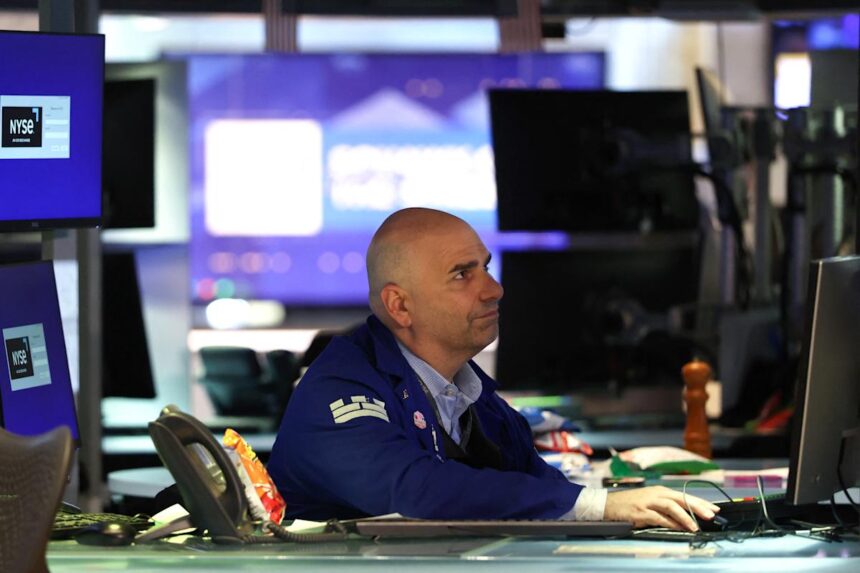
U.S. stock markets experienced a downward trend early Tuesday, primarily driven by a decline in tech stocks amid growing investor concern over inflation and geopolitical tensions. Futures for the tech-heavy Nasdaq 100 fell approximately 0.8%, while the S&P 500 futures decreased by 0.4%. The Dow Jones Industrial Average futures ticked down by 0.2%, continuing a trend of mixed performance across major indices.
One significant factor affecting the market is the rise in Treasury yields, with the benchmark 10-year rate soaring above 4.6% once more. This surge has been attributed to worries surrounding persistent inflation, exacerbated by ongoing disruptions in the Strait of Hormuz, which have led to a spike in oil prices. Investors find themselves contemplating whether the Federal Reserve will respond by hiking interest rates to rein in inflation, a scenario that could dampen the appeal of growth stocks, particularly those linked to the booming artificial intelligence sector.
Market sentiments were notably influenced by President Trump’s recent announcement regarding negotiations related to Iran’s nuclear program. He stated that serious discussions are underway and indicated a “very good chance” for a favorable outcome. Additionally, at the request of Gulf allies, Trump mentioned halting military action initially scheduled for Tuesday.
In corporate news, attention is firmly fixed on Nvidia’s upcoming earnings report set for Wednesday. As a leading figure in the AI landscape, Nvidia’s performance is critical, with investors eagerly awaiting insights that could affect market valuations in the tech sector, especially amid rising inflation and geopolitical uncertainties.
Aside from tech stocks, the cloud computing domain is seeing increasing competition. Stocks for CoreWeave and Nebius plummeted around 3% following an announcement by Blackstone and Google to launch a new AI computing venture. This firm will provide data center services, operations, and Google Cloud’s Tensor Processing Units as a compute-as-a-service offering, raising the stakes for existing players in the sector.
In retail news, Home Depot has reaffirmed its financial outlook amid strong continued investment in do-it-yourself projects by homeowners, despite a challenging economic landscape. The firm reported a modest same-store sales increase of 0.6% for the quarter, below analyst expectations, but better-than-anticipated revenue growth of approximately 5% year over year.
Meanwhile, tensions surrounding Elon Musk’s ventures are intensifying with the anticipated IPO of SpaceX. Some investors are concerned this new opportunity could divert attention and capital away from Tesla, especially as SpaceX emerges as a significant player in Musk’s portfolio.
Across Asian markets, stocks were mixed as the ripples from U.S. trading were felt globally. Japan’s Nikkei 225 lost ground ahead of anticipated economic data, while South Korea’s Kospi saw a steep decline. Conversely, markets in Australia and Hong Kong registered modest gains, showcasing the fragmented nature of the global market landscape.
In energy markets, oil prices fell after President Trump announced the cancellation of a planned military strike on Iran, following pleas from Gulf allies. This decision, amidst ongoing negotiations, has added to the volatility affecting oil supply concerns tied to the Strait of Hormuz. Despite a recent surge in oil prices, Trump’s comments suggest a cautious approach to military actions in the region, implying potential shifts in energy markets moving forward. Overall, the financial landscape is muddled with uncertainty, reflecting a confluence of economic and geopolitical factors impacting investor sentiment.