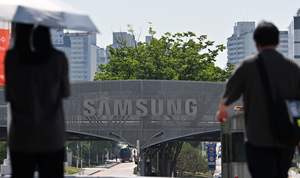
South Korea is on the brink of significant labor unrest, with tensions particularly concentrated in the technology and automotive sectors, raising concerns about potential disruptions to global supply chains. The impending strike at Samsung Electronics, one of the country’s largest companies, exemplifies these labor challenges. An unprecedented 18-day strike is set to commence on Thursday, as the company’s largest labor union demands substantial changes to its compensation structure.
The union’s key demands include the removal of the existing cap on performance bonuses and the adoption of a profit-sharing system that would allocate up to 15 percent of the company’s operating profit to employees. With Samsung projected to generate approximately 300 trillion won ($199 billion) in operating profit this year, meeting these demands could lead to bonus payouts as high as 45 trillion won. However, Samsung management has expressed strong opposition, warning that such fixed structures could hinder long-term investments necessary for the highly volatile semiconductor industry, which requires significant capital flexibility.
On Tuesday, mediation talks facilitated by the government took place, representing a last attempt to prevent what could be the largest strike in the history of Samsung Electronics. Should negotiations fail, the union has indicated that over 50,000 workers are prepared to join the strike. The stakes are high as the results of the Samsung negotiations may set a precedent for labor relations across the entire South Korean corporate landscape.
Hwang Yong-sik, a professor at Sejong University, noted that other companies and labor unions are closely monitoring the situation. He pointed out that should Samsung’s union successfully implement a profit-sharing mechanism linked directly to operating profit, it could send shockwaves throughout various industries in South Korea. This could lead to a standardization of profit-sharing structures across other sectors, escalating demands from unions nationwide.
Concerns surrounding labor unrest are not limited to Samsung. Unions at Hyundai Motor, HD Hyundai Heavy Industries, and tech giants like Kakao are intensifying their calls for increased wages and bonuses. Recent demands from Hyundai and Kia unions include bonuses equivalent to 30 percent of net profit, while those at HD Hyundai Heavy Industries seek similar bonuses linked to operating profits. Workers at companies such as Hanwha Ocean and Samsung Biologics are echoing these sentiments, advocating for compensation systems that reflect company performance more directly.
The potential impacts of these demands are particularly pronounced for smaller suppliers and subcontractors, which operate with tighter margins than large conglomerates. Industry officials warn that normalizing such fixed bonus systems could pressure smaller firms to meet similar demands, despite their limited financial resources.
Further complicating the landscape are recent revisions to labor laws, known as the “Yellow Envelope Law,” which have expanded protections for unions and broadened collective bargaining rights for subcontractors. Critics of the law argue that it may lead to increased labor disputes across industrial supply chains. As unions push for more equitable treatment, parent companies may find themselves increasingly entangled in negotiations they previously avoided.
The timing of this labor unrest is particularly precarious for South Korea’s export-driven economy, which is already grappling with rising competition from Chinese firms in critical sectors such as semiconductors, electric vehicles, and shipbuilding. Prolonged labor instability has the potential to accelerate the trend of Korean companies relocating investments and production overseas, as they continue to expand manufacturing operations in regions like the U.S., Southeast Asia, and Europe to mitigate operational and geopolitical risks.