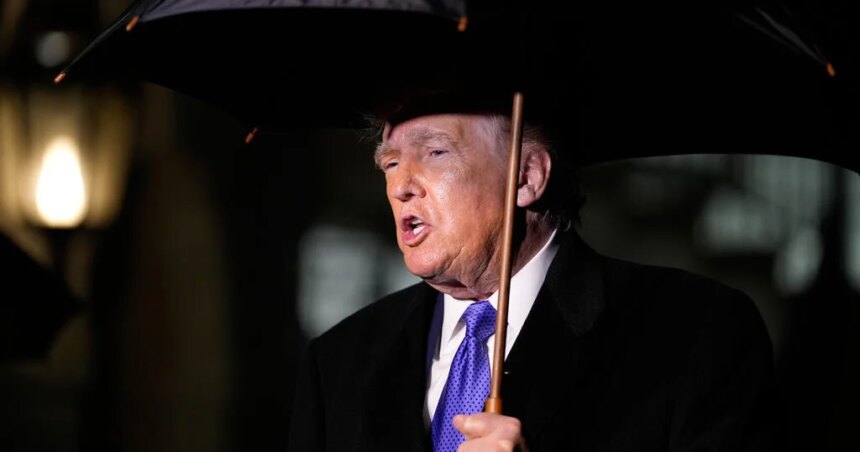
President Trump has announced a proposal to implement a 10% cap on credit card interest rates for a one-year period, a move that has garnered bipartisan support from various lawmakers but has faced opposition from credit card issuers. In a post on Truth Social, the president expressed his intent to protect American consumers from what he described as excessive interest rates that have persisted during the Biden administration. He proposed that the cap become effective on January 20, 2026, coinciding with the one-year anniversary of his potential second inauguration.
Current statistics from the Federal Reserve indicate that credit card interest rates average over 20%. If enacted, the proposed cap would significantly reduce borrowing costs for millions of Americans. It remains unclear how Trump plans to enforce this measure—whether through executive action or by pressuring credit card companies to voluntarily lower their rates.
The concept of capping credit card interest rates has previously gained traction, with bipartisan support evident in the legislation introduced by Republican Senator Josh Hawley and independent Senator Bernie Sanders. A similar initiative was also put forth in the House by Democratic Representative Alexandria Ocasio-Cortez and Republican Representative Anna Paulina Luna. Proponents argue that capping rates would alleviate the financial burden of Americans who are struggling under substantial credit card debt.
As of the third quarter of the previous year, Americans collectively owed a staggering $1.23 trillion in credit card balances, the highest recorded level. This financial strain translates to an average debt of $10,563 per U.S. household with credit card debt, raising concerns about the affordability of credit. Sanders and others have voiced that credit card companies can afford to lower their rates without compromising their viability.
However, opposition from financial institutions highlights potential risks associated with a rate cap. Groups like the American Bankers Association and the Bank Policy Institute have warned that limiting interest rates could reduce credit availability, especially for higher-risk borrowers. They argue that many consumers who depend on credit cards could lose access to these financial services if lenders are forced to limit their offerings to “low-risk customers.”
Billionaire investor Bill Ackman criticized the proposal as misguided, stating that imposing such a cap could push millions of consumers toward less regulated lending alternatives, which often come with higher interest rates. The CEO of America’s Credit Unions echoed this sentiment, arguing that while the goal of affordability is commendable, a 10% cap could make credit unattainable for many.
This proposal is part of Trump’s broader push to address concerns about borrowing costs, having recently directed the federal government to purchase mortgage bonds to lower rates. Additionally, he has advocated for the Federal Reserve to implement more aggressive cuts to its benchmark interest rate, which influences borrowing across various financial products. Trump is also expected to make a new nomination for the chair of the Federal Reserve in the coming weeks, seeking a candidate who will align with his views on interest rates.