President Donald Trump’s ambitious $300 million ballroom project, initially touted as being funded “100% by me and some friends of mine,” is beginning to reveal a complex web of financial support from a range of affluent contributors. A recent partial list of donors published by the White House has drawn attention for its inclusion of significant figures from the technology and cryptocurrency sectors, as well as close connections to Trump’s administration.
Despite the president’s original claims of self-funding, the published list indicates a broader network of contributors, including tech giants and billionaires closely tied to Trump’s political endeavors. Notably absent from this document were the exact amounts donated by each contributor, along with the names of several key players, including Nvidia, the Carrier Group, and various other anonymous benefactors. This lack of transparency has raised questions about the motivations behind these contributions.
Many donors reportedly stand to gain favor with Trump, who is known for his responsiveness to both public accolades and substantial gifts. This pattern is not unfamiliar, as it follows Trump’s acceptance of an “unconditional gift” from Qatar in the form of a modified jet for official use.
The White House disclosed a list of 37 contributors, which includes a variety of stakeholders: from cryptocurrency magnates to sports franchise owners, charitable foundations, and more. While some companies opted for anonymity until required disclosures take effect, the assurance was made that no foreign entities contributed.
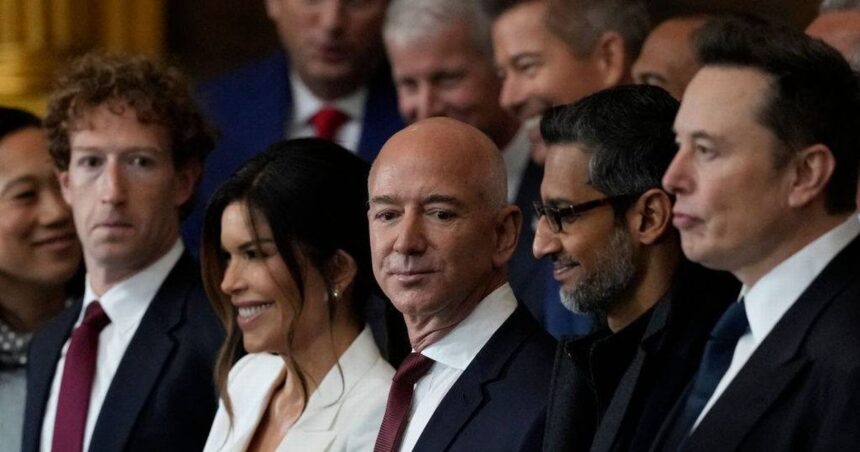
Among the notable contributors are high-profile tech companies such as Amazon, Apple, Google, and Meta, all of which have a history of interaction with Trump. Amazon notably made a significant contribution to Trump’s inauguration, and its services are integral to numerous government contracts, while Apple’s CEO, Tim Cook, has engaged with Trump over various business matters.
This collaboration between Trump and tech leaders has not been without tension. For instance, Google has faced litigation from Trump’s administration over antitrust issues, yet still managed to make a substantial donation to his inauguration. In a twist, YouTube, a Google subsidiary, settled a lawsuit with Trump by agreeing to a payout that inadvertently supports the ballroom’s construction.
Prominent figures from various sectors, including members of the Trump administration, have also lent their financial support. Contributors include Commerce Secretary Howard Lutnick and Small Business Administrator Kelly Loeffler, indicating a blend of private interests and public office.
Crypto firms like Coinbase and Ripple, alongside other notable figures in that space, have become increasingly influential, especially as Trump has rolled back regulations surrounding digital assets. This could point to a strategic alignment of interests between the administration and the burgeoning cryptocurrency sector.
Critics have voiced concerns over the implications of such donations. As Trump prepares for a potential second term, the intertwining of business interests and political influence appears to be a key theme. Proponents of the president assert that his leadership stems from a commitment to American workers rather than large corporations, suggesting an ongoing debate about the nature of Trump’s administration and its affiliations.
As the ballroom project unfolds and more information comes to light, the relationships between contributors and the administration will likely continue to be scrutinized, especially in the context of broader conversations about political fundraising and corporate influence in governance.