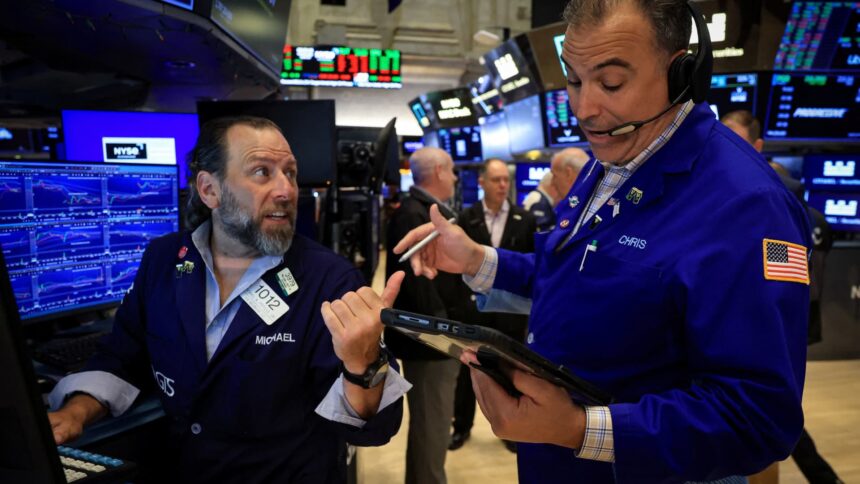
As the first half of the year draws to a close, Wall Street finds itself in a surprisingly optimistic position, especially with a resolution to U.S.-Iran tensions appearing on the horizon. This week, JPMorgan raised its forecast for the S&P 500 in 2026 from 7,200 to 7,800, indicating a potential 5% rise from current levels in what experts are calling a “Blue Sky” scenario. Other analysts share a similarly positive outlook, buoyed by recent data showing robust consumer spending amidst a spike in inflation.
The latest Personal Consumption Expenditures (PCE) report revealed inflation at its highest levels in nearly three years, yet the stability in consumer spending suggests that the U.S. economy is capable of withstanding what many hope is a temporary increase in energy prices. David Miller, the investment chief at Catalyst Funds, expressed confidence in the market, stating, “I think there’s a very good chance that equities can continue to rally from here in a pretty significant way through the end of the year.”
However, the path ahead is not expected to be smooth. As investors gear up for the Fourth of July holiday, they anticipate lower trading volumes, which could lead to increased volatility in the markets. The upcoming week is likely to see significant rebalancing of portfolios as managers adjust their holdings toward the end of the month and quarter, potentially contributing to market swings.
Seasonal patterns suggest a mixed outlook for July. Historically, it is the best month for the Dow and S&P 500 during the third quarter. Conversely, July marks the beginning of a typically challenging period for the Nasdaq, which tends to average a decrease of 0.8% during midterm election years, as cited in the Stock Trader’s Almanac. Paul Ciana, a technical strategist at Bank of America, raised caution this week regarding potential corrections, advising clients to consider protective measures as they move into the third quarter.
As investors evaluate their positions, some are opting to take profits on their major winners, particularly as the second half of the year is likely to witness increased volatility tied to midterm elections. Concerns are mounting that tech stocks, while having delivered stellar earnings growth thus far, may not sustain their momentum without a broader rally across other sectors. Additionally, investors are closely scrutinizing software companies, which face risks from the ongoing artificial intelligence evolution, and are selectively targeting semiconductor shares, notably memory providers that have benefited from AI demand. Nonetheless, there is apprehension that these stocks may have surged too quickly in recent weeks.
Darrell Cronk, chief investment officer for Wealth & Investment Management at Wells Fargo, recommends a patient approach for those looking to invest further in equities. He emphasized a preference for U.S. stocks over international opportunities, favoring large- and mid-cap companies over small caps, particularly in light of recent surges in the Russell 2000 index.
Market participants are also keeping a vigilant eye on the upcoming jobs report, although most expect it to exert minimal influence on an equity market increasingly focused on inflation dynamics. With expectations of a Federal Reserve interest rate hike potentially looming in September—following comments from Fed Chair Kevin Warsh emphasizing inflation—it remains imperative for investors to monitor inflation trends that could impact their strategies.
The bond market is revealing concerns too, as the spread between two-year and ten-year Treasury yields continues to narrow. An inverted yield curve could incite recession fears among investors, adding another layer of complexity to current market sentiment. Additionally, developments such as a strengthening dollar, declining oil prices, and fluctuating commodity prices are likely to influence how investors position their portfolios in the latter half of the year.
For now, however, there is a shared sense of relief among investors, having navigated a tumultuous first half marked by geopolitical strife and uncertainties surrounding technological advancements. With solid earnings reports and strong consumer activity, the prevailing trend of “buying the dip” continues as markets prepare to head into a critical July.
Upcoming economic data releases include the FHFA Home Price Index, Chicago PMI, and various employment figures, along with earnings announcements from notable companies like Nike and General Mills, which will be instrumental in shaping market momentum as the holiday approaches. Trading will pause on July 3 for the Independence Day observance, providing a brief respite before the markets resume their activity in the weeks to come.