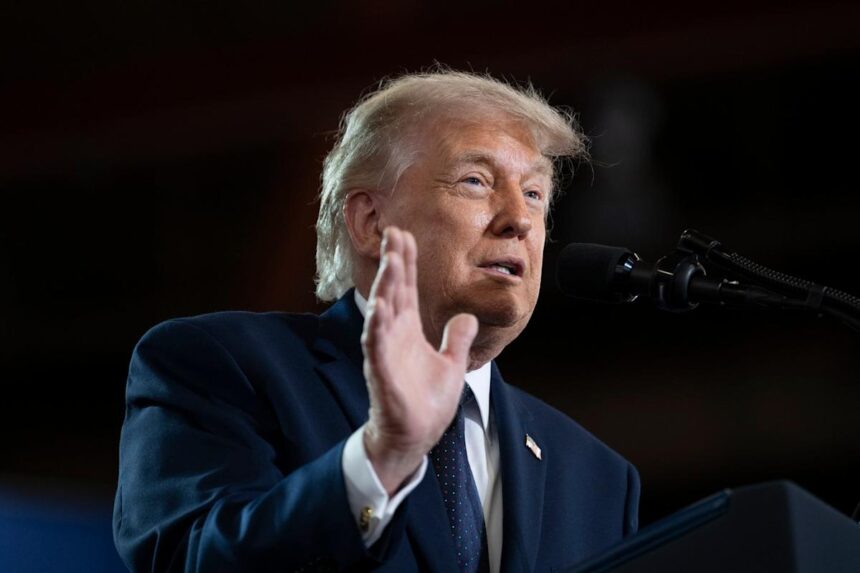
During President Donald Trump’s administration, Wall Street has seen remarkable growth, with major market indexes posting impressive gains. The Dow Jones Industrial Average surged by 57%, the S&P 500 rose by 70%, and the tech-heavy Nasdaq Composite skyrocketed by 142% during Trump’s first term. Despite two significant downturns during his second term—due to trade tensions and military conflicts—equities have rebounded robustly, with the Dow, S&P 500, and Nasdaq showing increases of 17%, 26%, and 37% respectively as of the end of May 2026.
Factors driving this rally include advancements in artificial intelligence (AI), the growth of quantum computing, record share buybacks among S&P 500 companies in 2025, and better-than-expected corporate earnings. However, beneath this seemingly robust growth lie several lurking threats that could derail the ongoing market expansion.
The most pressing issue currently affecting the market is the ongoing conflict in Iran, which has roused inflationary pressures in the U.S. economy. Following military actions authorized by Trump, Iran retaliated by closing the vital Strait of Hormuz, disrupting the flow of 20 million barrels of petroleum liquids daily—about 20% of global demand. This maneuver has sent fuel prices skyrocketing. Energy price shocks often lead to delayed effects for businesses, potentially triggering a second wave of inflation. Recent projections indicate that trailing 12-month inflation could rise dramatically from 2.4% in February to 4.18% by May, inciting fears that the Federal Reserve may be forced to increase interest rates.
Further complicating the landscape, the S&P 500’s Shiller Price-to-Earnings (P/E) ratio indicates that the market is historically expensive. At 42.66 in May, it exceeds the long-term average of 17.4 and approaches the record high of 44.19 reached during the dot-com bubble. Historical data suggests that sustained P/E ratios above 30 are unsustainable and have previously preceded sharp market declines.
Moreover, outstanding margin debt—a measure of the money borrowed by investors to buy stocks—has alarmingly increased from $850.6 billion to $1.304 trillion between April 2025 and April 2026. Such rapid escalation in margin debt has historically signaled increased risk-taking and can foreshadow impending market tops.
The potential for the SpaceX initial public offering (IPO) slated for June 12 introduces a new dynamic into the market. SpaceX, led by Elon Musk, aims to raise as much as $75 billion and is currently valued at $1.8 trillion, positioning it to become the largest IPO in history. However, concerns loom over its valuation, particularly given that the company generated $18.67 billion in sales last year. If successful, the IPO would yield a staggering price-to-sales (P/S) ratio of 96, far exceeding the historical threshold of 30 that sustainable companies typically maintain.
The Nasdaq’s recent regulatory change allowing SpaceX fast-tracked entry into the Nasdaq-100 could amplify the volatility surrounding this IPO. While this could create initial momentum in the stock price, limited float and a lock-up schedule for insiders selling shares could deflate the company’s valuation quickly, impacting the broader market in the process.
As these challenges converge, the likelihood of a stock market crash under Trump’s administration increases, though it remains uncertain whether it will indeed occur. Investors are urged to approach the current climate with caution, weighing the potential for significant returns against these emerging risks. Alternatives to investing in high-flying indexes like the S&P 500 have been recommended, emphasizing a more strategic approach in the face of mounting volatility.