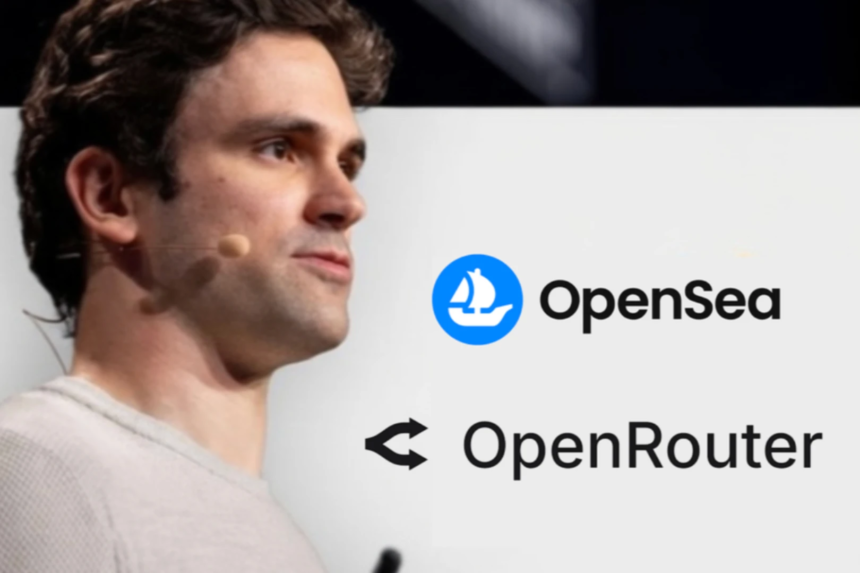
OpenRouter is emerging as a significant player in the AI space, capturing attention amid the rising popularity of platforms like OpenClaw, which require integration with various AI models. These models, including Claude, GPT, and DeepSeek, come with their own fees and APIs, which can complicate usage for developers. OpenRouter simplifies this process by bundling these models together within a unified interface, making it easier to access multiple AI tools while generating revenue through a 5% fee on each transaction.
At the helm of OpenRouter is Alex Atallah, a Stanford graduate and co-founder of OpenSea, the largest NFT marketplace that peaked at a valuation of over $13 billion. Atallah, who left OpenSea during the NFT market’s peak in July 2022 to embark on new ventures, witnessed the subsequent crash of the NFT market, further emphasizing the timing of his decision. Less than a year after leaving, he launched OpenRouter in 2023, capitalizing on the burgeoning demand for AI model aggregation.
OpenRouter serves as a routing platform that connects to APIs from hundreds of AI models, addressing a growing need among developers who want seamless access without the hassle of managing different API formats. This model of aggregation mirrors that of OpenSea, which did not produce NFTs but instead provided a platform for users to trade NFTs from various projects, taking a small cut from transactions. Similarly, OpenRouter facilitates access to AI models that have been developed by others, asserting itself as a central hub in a fragmented market.
The growth trajectory of OpenRouter has been meteoric. Starting with a monthly volume of $800,000 in October 2024, the platform experienced a tenfold increase to $8 million by May 2025. In less than a year, the total monetary transactions routed through the platform exceeded $100 million, yielding Atallah approximately $5 million in revenue with a lean team of fewer than ten employees.
The investment landscape for OpenRouter has also been robust, with a16z leading a $40 million funding round that placed the company’s valuation at $500 million. Through this financial backing, the company has gained further credibility, showcasing the growing confidence in AI as a lasting domain for innovation and revenue generation.
Atallah’s strategy highlights an important aspect of market dynamics in tech: the tendency for supply to be fragmented and the demand for consolidation. He has adeptly positioned OpenRouter at the intersection where developers require a simplified means of connecting to diverse AI models. This approach reflects a broader pattern observed in tech markets, where aggregation platforms often flourish during times of fragmentation.
Critics have voiced skepticism about the longevity of current AI trends, likening them to previous tech fads, including NFTs. However, Atallah appears unperturbed by such opinions, focusing instead on the opportunity to serve as a conduit for transactions, regardless of how the market evolves. By anticipating the need for a unified interface before it became prominent, Atallah has crafted an agile business model ready to adapt to the demands of a rapidly changing landscape.
In conclusion, Alex Atallah continues to leverage his ability to identify and capitalize on market opportunities, navigating the shifts between burgeoning tech sectors. Whether in the realm of NFTs or AI, his focus remains on positioning himself as a vital link in the supply chain, ensuring that he remains an influential figure regardless of which trend rises to prominence next.